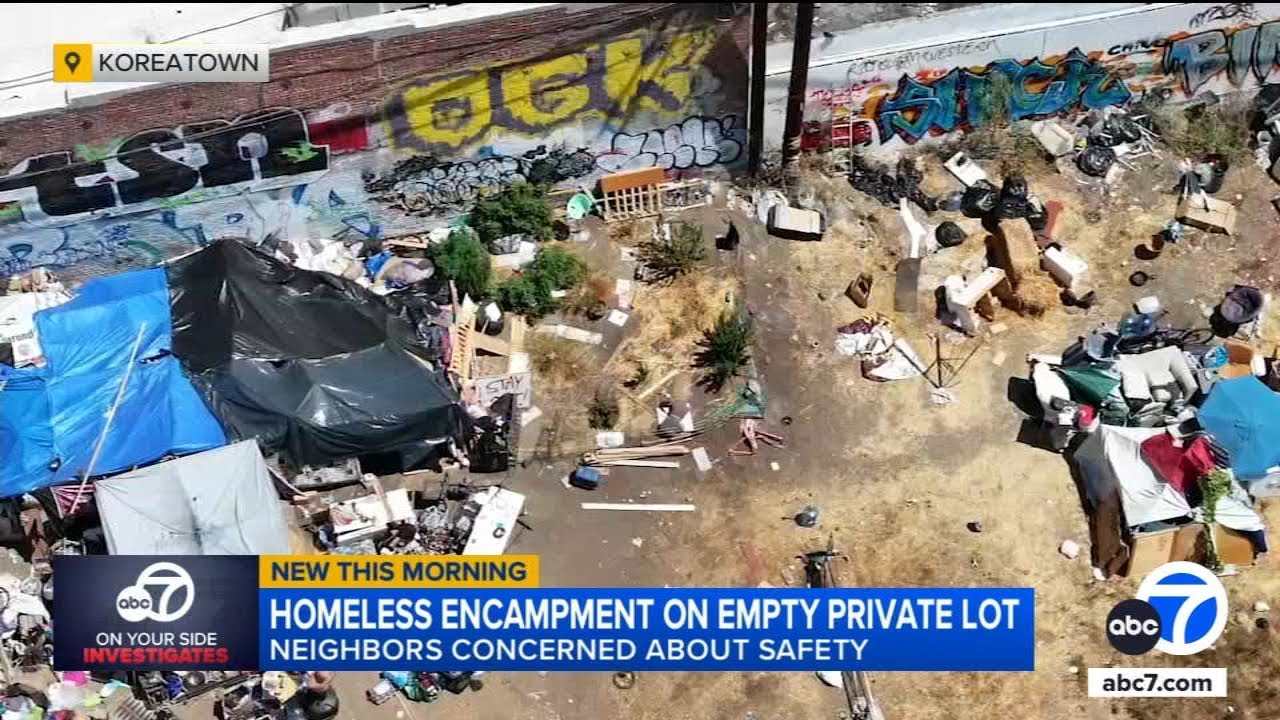
On a quiet block of South Manhattan Place in Koreatown, Los Angeles, a once-empty lot has become the center of a storm. Sandwiched between apartment buildings—and well within sight of residents paying sky-high rents—sits a massive homeless encampment, complete with features you’d expect in a suburban backyard.
This isn’t your typical street camp. The lot, outlined by fences (some crudely breached), sits snug between 7th and 8th Street. From above, it looks less like a neglected property and more like a makeshift neighborhood, teeming with activity and unlikely amenities.

This encampment is no small affair. Inside the fences, there’s much more than a collection of tents. Residents there have built their own community.
- Tennis court: Strings demarcate a sports area.
- Vegetable garden: Rows of plants signal signs of long-term living.
- BBQ pit: Evidence of shared meals and gathering.
- Makeshift barriers mark the perimeter, with cut fences serving as entrances for those who know where to look.
“It’s a whole community,” one observer put it, amazed at what has sprung up in a matter of weeks.
For the Angelenos who live nearby, the transformation has not been cause for celebration. Many are outspoken about their anger and frustration with city officials.
- Safety concerns: Children, pets, and adults no longer feel safe in what used to be a quiet part of town.
- Cleanliness and odor: Complaints about trash, waste, and a persistent stench fill city hotlines.
- Property value fears: Anxiety runs high over rent prices and falling home worth.
- Public nuisance: Residents feel ignored as they watch leaders, in their words, “sleeping on the job.”
The encampment hasn’t just changed the view. Police calls and crime reports have picked up. Local women talk about no longer feeling safe walking their dogs. Reporters covering the scene have faced threats and intimidation.
“They saw us and made clear they didn’t want us there. We’d be at risk stepping past the fence,” a journalist recounted. It’s clear this encampment is not just a curiosity, it’s a safety risk.
The health hazards are just as troubling. Needles, human and animal waste, and garbage dot the area around the encampment.
- Foul odors hang in the air
- Debris piles up along fences and sidewalks
- Visible biohazards put neighbors—and their pets—at risk
Neighbors have to watch every step or risk exposure to needles and waste. Calls to 311 about these dangers rarely result in quick cleanup.
One homeowner revealed how residents of the encampment pried open a nearby streetlight, running cords across the street to power their makeshift settlement.
- Exposed streetlight wiring
- Surge protectors rigged inside lamp posts
- Extension cords threaded into the camp, then hastily hidden from view
Electricity theft creates a fire hazard and is a risk to anyone passing by.
Because the lot is privately owned, the city’s options are limited. The property belongs to a Delaware-based LLC, making contact and enforcement even tougher. Councilmember Katie Urslowski was blunt: City procedures are overly bureaucratic and stop real progress.
Here, the blame game begins—a classic “circular firing squad”. Each agency points fingers at another, and action gets lost in piles of paperwork.
Getting things moving takes jumping through hoops. Here’s how action (should) happen:
City Response Timeline
- Residents submit complaints
- Department of Building and Safety (LBS) inspects—often after weeks
- LBS issues an order to comply to the owner
- Councilmember works to install no trespassing signs
- LAPD can finally intervene
It’s not a fast process, and that delay frustrates everyone affected.
Attempts to get answers from the Delaware LLC led nowhere, but Councilmember Urslowski insists the owners are now cooperating. No trespassing signs are coming, which would allow police to take action if people refuse to leave.
Still, enforcement is complicated when ownership is out of state and pockets are deep.
Sangman Lee, a frustrated neighbor, took matters straight to the media. After reaching out to ABC7, the story got the traction needed to push officials off the sidelines. As Lee put it, “I shouldn’t have to reach out to Channel 7 to get answers and movement here.” Yet for many residents, that’s the only way they see results.
Besides the obvious blight, the encampment is wearing on neighbors’ nerves. People talk about changed routines, feeling watched, or risking verbal abuse or worse for walking outside.

- Stench from trash and waste
- Needles in gutters and parks
- Anxiety about fires starting next door
“My apartment is steps away, but some days I’m afraid to even leave the building,” shared a young woman nearby.
Other LA neighborhoods have faced similar flare-ups. Earlier this year, a vacant Hollywood building packed with squatters ended up burning to the ground after repeated warnings—another tragedy city agencies couldn’t head off in time.
Slow government response has become a pattern: complaints pile up, but little changes quickly.
Getting a nuisance designation for trouble properties is a drawn-out affair in LA. The city sometimes takes years to slap the label on a property, which is what triggers easier and faster cleanups.
Meanwhile, problems get worse and neighbors pay the price.
Councilmember Urslowski is hopeful a cleanup is coming in the next few weeks. With the city, police, and the property owner finally moving in the same direction, everyone’s watching closely to see if this timeline holds.
Fixing this single encampment won’t touch the bigger problem. Los Angeles is dotted with similar situations—private and public properties filled with makeshift communities, risks, and frustrated neighbors.
A real fix will require more than just a one-off response. LA needs smarter, faster, and more accountable solutions for every neighborhood.
Safeguarding Your American Dream: Discover the Power of America First Healthcare

In today’s economy, healthcare costs remain one of the biggest threats to financial stability and family security. Americans work hard to build a better life, yet rising medical expenses can quickly erode savings, force tough trade-offs, and even push families toward debt or bankruptcy. Medical bills continue to rank as the leading cause of personal bankruptcy in the United States, with millions facing underinsurance or unexpected out-of-pocket burdens that no one plans for. Many turn to government-run marketplace plans under the Affordable Care Act, hoping for relief, only to discover that what appears affordable on paper often delivers higher long-term costs, limited real protection, and coverage that may not align with personal values or family needs.
America First Healthcare stands out as a private insurance agency dedicated to helping conservatives and families secure better coverage and better rates through customized, values-aligned options. By conducting free insurance reviews, the agency uncovers hidden gaps in existing policies and connects clients with private alternatives that emphasize personal responsibility, small-government principles, and genuine affordability—often delivering up to 20% savings while providing stronger protection for the American Dream.
The allure of marketplace plans is easy to understand: open enrollment periods, premium tax credits for many households, and the promise of “comprehensive” benefits mandated by law. Yet recent data reveals a different reality, especially after the expiration of enhanced premium subsidies at the end of 2025. Enrollment for 2026 dropped by more than one million people compared to the prior year, with many shifting to lower-tier bronze plans to keep monthly premiums manageable.
These plans feature significantly higher deductibles—averaging around $7,500 nationally—and greater cost-sharing requirements. Families who once paid modest amounts after subsidies now face average premium increases of $65 or more per month, even as they accept plans that leave them responsible for thousands in upfront costs before meaningful coverage kicks in.
High deductibles create a dangerous barrier to care. Studies show that people in such plans are less likely to seek timely treatment for chronic conditions, attend preventive screenings, or fill necessary prescriptions. A seemingly minor illness or injury can balloon into major expenses when patients delay care until problems worsen. For a family of four, a single hospitalization, cancer diagnosis, or unexpected surgery can easily exceed the deductible, triggering coinsurance and out-of-pocket maximums that still leave substantial bills. One recent analysis noted that some proposed changes could push family deductibles toward $31,000 in future years, further exposing households to financial risk.
Beyond the numbers, marketplace plans often carry structural limitations. Coverage for certain critical services may include waiting periods or narrower networks that restrict access to preferred doctors and specialists. Preventive care is required to be covered without cost-sharing, but everything else—lab work, imaging, specialist visits, or ongoing treatment—typically waits until the deductible is met. This reactive model contrasts sharply with the proactive, holistic approach many families prefer, especially those focused on wellness, early intervention, and maintaining health to enjoy life rather than merely reacting to illness.
Values alignment represents another growing concern. Government-influenced plans operate within a framework shaped by federal mandates and political priorities that may not reflect conservative principles of limited government, personal freedom, and ethical stewardship. Families who want to direct their healthcare dollars toward providers and benefits that honor traditional values sometimes find marketplace options feel misaligned, forcing a compromise between affordability and conviction.
Private alternatives, by contrast, offer year-round flexibility without the restrictions of open enrollment windows. Independent agents can shop across a wider range of carriers to design plans tailored to specific family needs—whether that means lower deductibles for frequent medical users, broader provider networks, or add-ons that support wellness and preventive services from day one. Clients frequently report more stable premiums that do not automatically escalate each year, along with genuine cost savings once the full picture of deductibles, copays, and coverage depth is considered.
Take the experience of real families who made the switch. Amanda C. shared that her new plan felt “way better” than what she had through the marketplace. Johnny Y. noted his previous coverage kept increasing annually until he found a more stable private option. Sofia S. expressed delight with her plan and began recommending it to others. These stories echo a common theme: when families move beyond one-size-fits-all government marketplaces, they often discover customized protection that better safeguards both health and finances.
Founder Jordan Sarmiento’s own journey underscores the stakes. In 2021, a six-day hospitalization generated a $95,000 bill. Under a well-structured private “Conservative Care Coverage” plan, his out-of-pocket responsibility would have been just $500. That stark difference illustrates how thoughtful planning and private options can prevent a medical event from becoming a financial catastrophe.
Practical steps exist for anyone questioning their current coverage. Start with a no-obligation review of your existing policy to identify gaps—high deductibles, limited critical-care benefits, or escalating premiums. Compare total projected costs (premiums plus potential out-of-pocket expenses) rather than monthly premiums alone. Consider family health history, anticipated needs, and lifestyle priorities. Private agencies can present side-by-side options that include stronger wellness incentives, broader access, and plans built on shared values of self-reliance and freedom.
In an era when healthcare inflation continues to outpace general cost-of-living increases, relying solely on marketplace solutions carries growing risk. Families who proactively explore private alternatives frequently achieve meaningful savings while gaining peace of mind that their coverage truly works when needed most.
America First Healthcare makes this exploration straightforward through its free review process. Families and individuals receive personalized guidance to close coverage holes, reduce unnecessary expenses, and secure plans that align with conservative principles—protecting wallets, health, and the American Dream without government overreach. Many who complete a review discover they can enjoy better benefits for less, often saving up to 20% while gaining the customization and stability that marketplace plans struggle to deliver.
Ultimately, protecting your family’s future requires looking beyond the marketing of “affordable” government options. By understanding the long-term costs hidden in high deductibles, shifting coverage tiers, and values mismatches, Americans can make empowered choices. Private, values-driven insurance offers a smarter path—one that rewards diligence, supports wellness, and delivers real security. For those ready to move beyond the limitations of traditional marketplace plans, a simple review can reveal options designed to serve families, not bureaucracies. The American Dream thrives when individuals and families retain control over their healthcare decisions, and thoughtful private coverage plays a vital role in making that possible.