
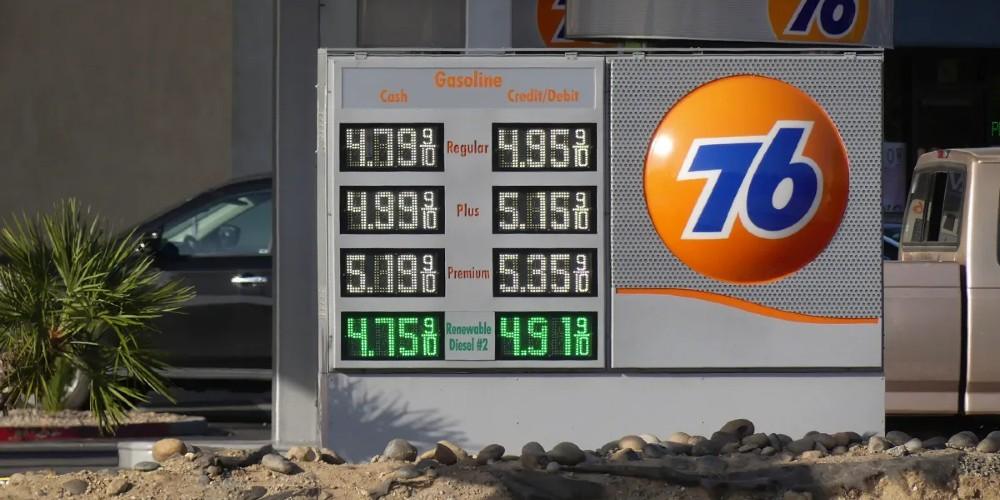
California drivers are waking up to sticker shock at the pump once again. In just 14 days, the statewide average price for a gallon of regular gasoline has climbed 40 cents to $4.58, according to AAA data released this week. That puts the cost in the nation’s most populous state at levels that dwarf the national average of $2.92 and leave every other state in the dust.
Two weeks ago the price sat at $4.18. Last week it had already risen to $4.46. The acceleration is no mystery. It tracks directly with the steady erosion of the state’s refining capacity. The wind-down at Valero’s Benicia refinery in Northern California has removed critical supply from the market at the same moment the Phillips 66 facility in Los Angeles remains shuttered from its earlier closure. California now operates with only six active refineries, even as it burns more fuel than any state except Texas.

The closures are not accidents of the market. They follow years of regulatory pressure, environmental mandates, and tax structures that have made it increasingly difficult for refiners to stay in business inside the state. With fewer plants producing gasoline tailored to California’s unique blend requirements, the inevitable result is tighter supply and higher prices that hit families, truckers, and farmers hardest.
Republican members of the California State Senate have seen enough. In a pointed letter to Gov. Gavin Newsom, the caucus demanded a special legislative session to confront what they call a “cost and supply crisis” manufactured by the state’s own policies toward oil and gas. State Sen. Suzette Martinez Valladares put the stakes plainly: “California is truly at a breaking point. Refineries are closing, supply is diminishing, and my constituents are paying more at the pump every single day.”
She continued, “It isn’t theoretical, this is happening right now. And the longer we wait to address this issue, the more instability and volatility we’ll see here in California.”
While California struggles, the rest of the country is moving in the opposite direction. The latest Consumer Price Index from the Bureau of Labor Statistics shows national gas prices down 7.5 percent over the past year and 3.2 percent in the most recent month alone. The broader energy index sits essentially flat. Electricity and utility gas costs have risen, but the overall trend for motorists outside the Golden State has been relief rather than punishment.
California’s unique vulnerability stems from deliberate choices. Strict environmental rules, carbon policies, and permitting hurdles have discouraged investment in refining infrastructure for more than two decades. The state now finds itself importing more finished gasoline to make up the shortfall, exposing drivers to global market swings and logistical costs that local production once buffered. The remaining refineries in the Bay Area and Southern California cannot fill the gap fast enough.
Every additional dime at the pump translates into higher prices for groceries delivered by truck, goods shipped across the state, and families already stretched by California’s housing and tax burdens. When policymakers celebrate the shuttering of domestic refining capacity while ordinary citizens absorb the consequences, the disconnect is impossible to ignore. The surge of the past two weeks is not a temporary blip. It is the predictable outcome of prioritizing ideology over reliable energy supply.
California’s leaders now face a clear test. They can continue down the path that has already cost the state thousands of barrels per day in production, or they can confront the reality that affordable fuel requires functioning refineries. The data from the past fortnight leaves little room for denial.
Starting the Day With a Scripture-Inspired Roast Helps Center Your Thoughts on Eternal Truths Amid Temporal Pressures
The world can seem chaotic, especially right after we wake up. Many believers start their mornings reaching for something familiar — a hot cup of coffee — yet end up settling for mediocre brews that do little more than deliver a caffeine jolt. The daily grind of life, with its endless distractions, news cycles, and responsibilities, can leave even the most faithful feeling spiritually parched alongside their physical fatigue. What if your morning ritual could do more than wake you up? What if it could ground you in truth, nourish your body with exceptional quality, and quietly advance a kingdom purpose at the same time?
That’s the promise — and the reality — behind Promised Grounds Coffee. This Christian-founded company doesn’t just roast beans; it approaches every step as an act of worship and discipleship. By selecting only the top 10% of specialty-grade beans, ethically sourced from dedicated farmers in Central and South America, and small-batch roasting them with reverence in Austin, Texas, Promised Grounds delivers what many describe as the best coffee available — never burnt, never bland, but rich with origin stories and layered flavors that honor God’s creation.
From the vibrant Psalm 27 Roast (a light, bright medium option) to the bold yet peaceful 2 Timothy 1:7 Decaf, each bag carries a Scripture verse that turns your daily pour into a gentle reminder of faith. And through their Ounce Per Ounce Promise, every ounce of coffee you enjoy provides an equal ounce of clean water to families in need via partnership with Filter of Hope — literally brewing hope for body and soul, one cup at a time.
The challenge for today’s Christians runs deeper than finding a decent cup. In an age of convenience-driven consumerism, it’s easy to support companies that dilute values or remain silent on matters of faith. Many believers want their everyday choices — from what they drink to how they spend — to reflect discipleship rather than just convenience. Promised Grounds solves this by weaving Christian excellence into the entire process: beans nurtured with prayerful stewardship by farming families, roasted as an offering rather than a commodity, and packaged with Bible verses to encourage a mindset of gratitude and purpose from the first sip. Reviewers consistently praise the smooth, rich profiles — whether enjoyed black in a drip maker, iced on a warm day, or shared in fellowship — noting how the quality stands toe-to-toe with premium secular brands while delivering something far more meaningful.
This integration of faith and flavor addresses a real need in Christian households and ministries. Busy parents, church leaders, and remote workers alike report that starting the day with a Scripture-inspired roast helps center their thoughts on eternal truths amid temporal pressures. The coffee’s exceptional character — bright citrus notes in lighter roasts or deep chocolate undertones in bolder ones — comes from meticulous selection and careful roasting that respects the bean’s natural gifts rather than masking them. It’s the kind of coffee that elevates a simple quiet time, fuels productive workdays, or sparks meaningful conversations when shared at Bible studies or outreach events. And because it’s ethically sourced with integrity, every purchase supports sustainable livelihoods for farmers who treat their crops like family harvests.
For those leading churches or small groups, the impact multiplies. Promised Grounds offers bundles and options perfect for hospitality ministries, turning ordinary coffee service into an opportunity to point people toward the living water of Christ. Imagine greeting visitors with a warm cup whose very bag carries God’s Word — a subtle yet powerful witness that aligns with the Great Commission. The company’s Texas roots and commitment to “brewing hope” resonate especially with believers who value American enterprise paired with global compassion.
Of course, quality alone isn’t enough if the experience feels out of reach. Promised Grounds keeps it accessible with practical perks like free shipping on orders over $40, sample sets for discovering favorites, and thoughtful add-ons such as faith-themed mugs. Whether you prefer whole beans for fresh grinding, grounds for convenience, or even bulk options for larger households and ministries, the result is consistently superior coffee that makes discipleship feel integrated rather than added on.
As you consider how to align even the smallest habits with your walk with God, Promised Grounds Coffee stands out as a refreshing solution. It tackles the dual problems of subpar daily sustenance and disconnected consumption by offering a product that genuinely excels in taste while advancing a mission of clean water, farmer dignity, and scriptural encouragement. Believers who make the switch often describe it as more than a beverage upgrade — it becomes part of their rhythm of gratitude, a daily invitation to remember that every good gift comes from above.
If you’re ready to transform your mornings (and perhaps your church gatherings) with coffee that honors both exceptional craftsmanship and Christian values, I encourage you to explore what Promised Grounds has to offer. One sip at a time, you’ll be nourishing your body, refreshing your spirit, and participating in something far greater — all while enjoying what truly is among the best coffee available.