
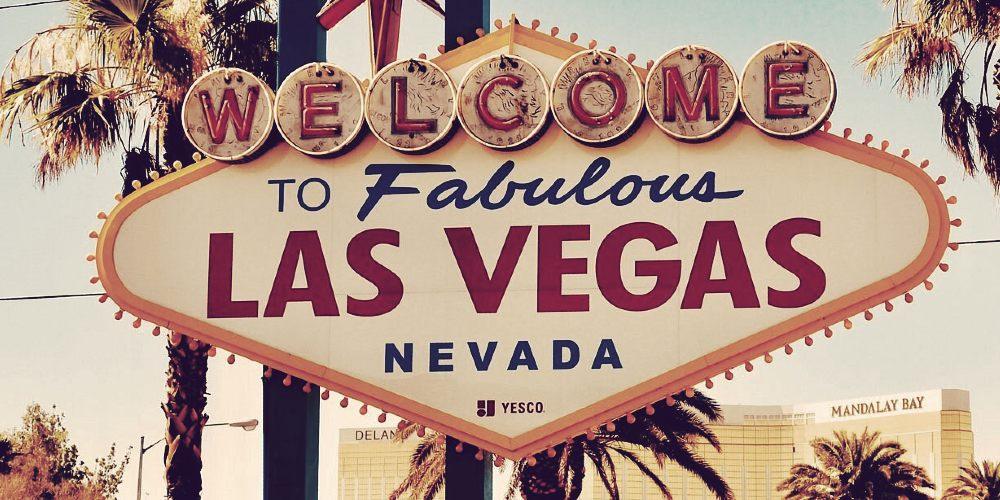
(The Economic Collapse Blog)—If you want to get a really good indication of where the U.S. economy is heading, just look at what is happening in Las Vegas. During good times, hotel occupancy rates are very high and lots of money is thrown around in the casinos. But when times are getting tough, less people head to Las Vegas and those that do go tend to be tighter with their money. We saw a perfect example of this during the Great Recession. Once the global financial crisis hit, gambling revenues in Las Vegas plunged. The following comes from an ABC News article that was published in 2009…
To almost everyone — and especially the Germans — Las Vegas seemed recession-proof. But now, since the summer of 2008, gambling revenues have dropped by more than 10 percent (see graphic) after having plunged to as much as 25 percent in the months immediately following the bankruptcy of Lehman Brothers.
Of course things eventually turned around and Las Vegas thrived for many years.

But now another enormous shift is taking place. A new downturn has begun “with hotel occupancy, visitor numbers and spending all slipping”…
Las Vegas is experiencing a notable downturn in tourism, with hotel occupancy, visitor numbers and spending all slipping.
Industry data points to several key reasons behind the shift, including rising costs, fewer international travellers, and broader economic uncertainties.
So why is this happening?
It doesn’t take a rocket scientist to figure it out.
Despite the absolutely nonsense that you hear on CNBC, the truth is that the U.S. economy is rapidly going in the wrong direction.
As a result, occupancy rates at Las Vegas hotels are absolutely plummeting…
Las Vegas hotels are posting some of the steepest year-over-year performance declines among major U.S. markets this summer as international visitor weakness and economic uncertainty take a toll.
Preliminary STR data indicates Las Vegas occupancy fell 14.9% in June, which, if actualized, would mark the city’s deepest monthly decline so far this year.
The deterioration continued into July, with the week ending July 5 showing Vegas with the worst declines across the top 25 U.S. markets: Occupancy fell 16.8%, to 66.7%, and revenue per available room (RevPAR) plunged 28.7%, to $102.75, according to STR.
Because things are so slow, workers are being laid off, and the unemployment rate in the Las Vegas area jumped quite a bit higher last month…
Las Vegas’ jobless rate ticked higher again last month amid a slump in tourism this year.
The Las Vegas-area’s unemployment rate was 5.8 percent in June, up from 5.5 percent in May, according to non-seasonally adjusted figures released this week by the Nevada Department of Employment, Training and Rehabilitation.
Nobody can deny what is happening in Las Vegas, because the numbers are telling a very clear story. And it turns out that casinos in other areas of the country are also experiencing financial difficulties right now. Here is just one prominent example…
Earlier this month, resort and casino operator Maverick Gaming filed for Chapter 11 protection in the U.S. Southern District of Texas. The Kirkland, Washington-based company owns five casinos across Nevada, Colorado, and Washington and reported that it currently has between $100 million and $500 million in liabilities.
The Nevada properties include a combined 1,200 hotel rooms, 1,700 slot machines and 43 table games. The Washington resorts also have 17 card tables used by visitors specifically seeking out the hotels for gambling trips.
This reminds me so much of the Great Recession.
If you think that I am exaggerating, let me give you another parallel to 2008 and 2009. Our housing market just experienced “its slowest spring season in more than a dozen years”…
The US housing market just logged its slowest spring season in more than a dozen years, leaving Glennda Baker, a veteran real estate agent in Atlanta, struggling to sell 21 listings.
She’s been slashing prices. But months of chatter about AI taking jobs and tariffs tanking the economy is feeding into buyer indecision.
“People say price solves everything,” Baker said. “But price doesn’t solve uncertainty.”
For the entire year of 2025, home sales in the United States are expected to hit the lowest level in 30 years…
Home sales are set to plunge to a 30-year low — with experts warning the slump could deepen into a full‑blown collapse. Just four million transactions are expected in the US this year, according to new data from Realtor.com. That would mark the lowest level since 1995, according to the National Association of Realtors.
Yes, it is being projected that home sales in 2025 will be even lower than they were in 2008 and 2009.
That isn’t just bad. That is really bad.

So why do the talking heads on CNBC continue to insist that the economy is strong? Have they gone completely nuts?
I simply don’t understand why they can’t see the parallels to 2008 and 2009, but one thing that we didn’t have in 2008 and 2009 that we are dealing with today is rampant inflation.
If you can believe it, the average list price of a 3-year-old used vehicle has risen by $9,476 over the past six years…
Detroit Free Press autos writer Jamie LaReau reported recently that the average list price for a 3-year-old vehicle is now $32,635, an infuriating $9,476 more than it was six years ago.
This is one of the primary reasons why so many Americans are driving around in 20-year-old vehicles these days.
The average age of the vehicles on U.S. roads has reached an all-time record high, and that isn’t going to change any time soon.
Meanwhile, meat prices just continue to skyrocket…

In June, meat prices well outpaced the entire food-at-home category, with steak and ground beef prices rising 12.4% and 10.3%, respectively, compared with a year earlier, according to the Labor Department’s consumer price index (CPI).
Beef prices are now hitting a record $9.26 per pound at retailers as of June, according to the USDA.
Inflation is causing our standard of living to collapse.
This is something that I have written about over and over again.
At this stage, things are so bad that 83 percent of Americans are dealing with “stressflation”…
A LifeStance Health survey released today reveals “stressflation” is affecting most Americans, with 83% reporting financial stress driven by inflation, mass layoffs, the rising cost of living and recession fears. Millennials and Gen Z report the most significant mental health impacts.
So if you are feeling stressed about the rapidly rising cost of living, you are certainly not alone.
Sadly, the long-term trends that have brought us to this point are not going to abate any time soon.
In fact, a tremendous amount of societal chaos is on the horizon.
So I would encourage you to batten down the hatches, because the storm that is heading our way is not going to be pleasant.
Michael’s new book entitled “10 Prophetic Events That Are Coming Next” is available in paperback and for the Kindle on Amazon.com, and you can subscribe to his Substack newsletter at michaeltsnyder.substack.com.
Starting the Day With a Scripture-Inspired Roast Helps Center Your Thoughts on Eternal Truths Amid Temporal Pressures
The world can seem chaotic, especially right after we wake up. Many believers start their mornings reaching for something familiar — a hot cup of coffee — yet end up settling for mediocre brews that do little more than deliver a caffeine jolt. The daily grind of life, with its endless distractions, news cycles, and responsibilities, can leave even the most faithful feeling spiritually parched alongside their physical fatigue. What if your morning ritual could do more than wake you up? What if it could ground you in truth, nourish your body with exceptional quality, and quietly advance a kingdom purpose at the same time?
That’s the promise — and the reality — behind Promised Grounds Coffee. This Christian-founded company doesn’t just roast beans; it approaches every step as an act of worship and discipleship. By selecting only the top 10% of specialty-grade beans, ethically sourced from dedicated farmers in Central and South America, and small-batch roasting them with reverence in Austin, Texas, Promised Grounds delivers what many describe as the best coffee available — never burnt, never bland, but rich with origin stories and layered flavors that honor God’s creation.
From the vibrant Psalm 27 Roast (a light, bright medium option) to the bold yet peaceful 2 Timothy 1:7 Decaf, each bag carries a Scripture verse that turns your daily pour into a gentle reminder of faith. And through their Ounce Per Ounce Promise, every ounce of coffee you enjoy provides an equal ounce of clean water to families in need via partnership with Filter of Hope — literally brewing hope for body and soul, one cup at a time.
The challenge for today’s Christians runs deeper than finding a decent cup. In an age of convenience-driven consumerism, it’s easy to support companies that dilute values or remain silent on matters of faith. Many believers want their everyday choices — from what they drink to how they spend — to reflect discipleship rather than just convenience. Promised Grounds solves this by weaving Christian excellence into the entire process: beans nurtured with prayerful stewardship by farming families, roasted as an offering rather than a commodity, and packaged with Bible verses to encourage a mindset of gratitude and purpose from the first sip. Reviewers consistently praise the smooth, rich profiles — whether enjoyed black in a drip maker, iced on a warm day, or shared in fellowship — noting how the quality stands toe-to-toe with premium secular brands while delivering something far more meaningful.
This integration of faith and flavor addresses a real need in Christian households and ministries. Busy parents, church leaders, and remote workers alike report that starting the day with a Scripture-inspired roast helps center their thoughts on eternal truths amid temporal pressures. The coffee’s exceptional character — bright citrus notes in lighter roasts or deep chocolate undertones in bolder ones — comes from meticulous selection and careful roasting that respects the bean’s natural gifts rather than masking them. It’s the kind of coffee that elevates a simple quiet time, fuels productive workdays, or sparks meaningful conversations when shared at Bible studies or outreach events. And because it’s ethically sourced with integrity, every purchase supports sustainable livelihoods for farmers who treat their crops like family harvests.
For those leading churches or small groups, the impact multiplies. Promised Grounds offers bundles and options perfect for hospitality ministries, turning ordinary coffee service into an opportunity to point people toward the living water of Christ. Imagine greeting visitors with a warm cup whose very bag carries God’s Word — a subtle yet powerful witness that aligns with the Great Commission. The company’s Texas roots and commitment to “brewing hope” resonate especially with believers who value American enterprise paired with global compassion.
Of course, quality alone isn’t enough if the experience feels out of reach. Promised Grounds keeps it accessible with practical perks like free shipping on orders over $40, sample sets for discovering favorites, and thoughtful add-ons such as faith-themed mugs. Whether you prefer whole beans for fresh grinding, grounds for convenience, or even bulk options for larger households and ministries, the result is consistently superior coffee that makes discipleship feel integrated rather than added on.
As you consider how to align even the smallest habits with your walk with God, Promised Grounds Coffee stands out as a refreshing solution. It tackles the dual problems of subpar daily sustenance and disconnected consumption by offering a product that genuinely excels in taste while advancing a mission of clean water, farmer dignity, and scriptural encouragement. Believers who make the switch often describe it as more than a beverage upgrade — it becomes part of their rhythm of gratitude, a daily invitation to remember that every good gift comes from above.
If you’re ready to transform your mornings (and perhaps your church gatherings) with coffee that honors both exceptional craftsmanship and Christian values, I encourage you to explore what Promised Grounds has to offer. One sip at a time, you’ll be nourishing your body, refreshing your spirit, and participating in something far greater — all while enjoying what truly is among the best coffee available.