
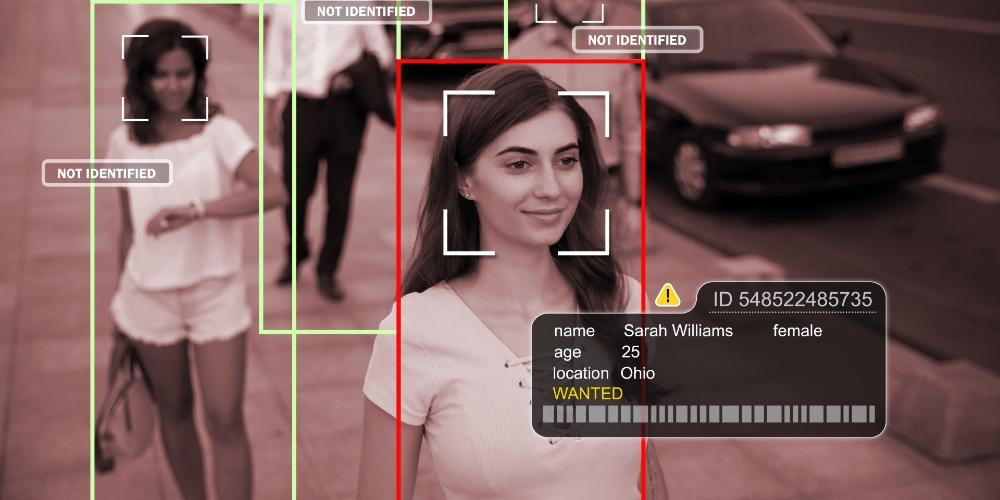
- The U.S. Open golf tournament and the NBA’s new Intuit Dome are implementing facial recognition technology for “frictionless” entry and fan personalization, normalizing surveillance in public leisure spaces.
- Critics warn that marketing these systems as conveniences conceals deeper issues, including diminished privacy, lack of informed consent and the quiet expansion of biometric surveillance in everyday life.
- Taylor Swift’s concerts and Madison Square Garden used facial recognition to track or ban individuals without their knowledge, raising ethical and legal red flags about discrimination, targeting and lack of transparency.
- The U.S. lacks a federal biometric data law. While some states like Illinois and California have protections, others, including New York, have inconsistent or limited regulations, leaving gaps in consumer protection.
- A June article by the New York State Bar Association urges lawmakers to address these issues, warning that unchecked deployment of facial recognition poses serious risks to civil liberties and privacy.
(Natural News)—Biometric surveillance is no longer confined to airports, border checkpoints or high-security zones. Increasingly, it is being tested and normalized on fairways, courts and stadium concourses across the United States.
At this year’s U.S. Open in Oakmont, Pennsylvania, the United States Golf Association (USGA) has quietly expanded the use of facial recognition for event entry, once again partnering with British tech firm FortressGB and facial authentication company Wicket. Spectators now have the option to register their face ahead of time and glide through entry points without presenting a physical ticket for a “frictionless” experience.

However, critics warned that this framing, selling biometric scanning as a mere convenience, masks a more complex and unsettling shift: the normalization of facial surveillance in public leisure spaces, where expectations of anonymity and privacy have traditionally been higher.
The golf tournament isn’t alone in its embrace of this trend. On the other side of the country, the National Basketball Association’s (NBA’s) Los Angeles Clippers are preparing to open the doors of their futuristic new home, the Intuit Dome, with a more comprehensive data-driven approach.
Managed by Halo Sports and Entertainment, a company owned by former Microsoft CEO and Clippers chairman Steve Ballmer, the venue doesn’t just scan faces for entry. It tracks sound levels at individual seats to reward enthusiastic fans, uses facial recognition to personalize welcome screens and continuously gathers behavioral data under the promise of enhancing the fan experience.
Both cases reflect a growing pattern in American sports: venues are becoming testbeds for cutting-edge surveillance technologies, all under the guise of improving speed, security and personalization. Yet as these systems become more embedded, the long-term consequences, especially related to data privacy and civil liberties, remain unresolved.
NYSBA warns the public about facial recognition’s lack of regulation
An article published by the New York State Bar Association (NYSBA) this June warned the public about the growing use of facial recognition technology at entertainment venues.
This piece, written by Kylie Ruff, a 2025 graduate from St. John’s University School of Law, explores how venues across the country are increasingly turning to facial recognition to streamline security and entry. However, he argued that it raises deep questions about privacy, fairness and the balance between safety and surveillance.
For instance, in 2019, pop star Taylor Swift’s security team used facial scanning kiosks at her concert venues to track known stalkers – a move that sparked alarm when it was revealed that the scans had been conducted without fans’ knowledge or consent.
Recently, Madison Square Garden (MSG) Entertainment faced backlash for using facial recognition to ban lawyers from firms engaged in litigation against the company. One mother was barred from seeing the Rockettes with her daughter solely because she worked at a law firm that had a pending case with MSG. None of these exclusions stemmed from criminal history, only affiliations and criticisms.
These practices, Ruff suggested, tread dangerously close to weaponizing surveillance tools for personal or corporate retaliation, without meaningful oversight or accountability. (Related: Malfunctioning facial recognition technology may put innocent individuals at risk.)
Moreover, the U.S. has no comprehensive regulation governing the collection, storage or use of biometric data, including facial recognition scans. Only a handful of states, including Illinois and California, have enacted laws requiring businesses to either obtain consent or offer opt-out mechanisms. While New York City has rules requiring biometric disclosure in commercial settings, the state lacks a uniform approach.
FutureTech.news has more stories on the dystopian measures of governments to surveil citizens. Watch the video below that talks about government agencies that were caught lying about the facial recognition program.
More related stories:
- Irish government to legalize retrospective facial recognition technology.
- Russia to launch nationwide facial recognition payment system this year.
- Mastercard rolls out payment system that uses FACIAL RECOGNITION technology.
- Half of America already in law enforcement’s facial recognition network.
- U.K.’s Crime and Policing Bill 2025 reignites facial recognition controversy.
Sources include:
Starting the Day With a Scripture-Inspired Roast Helps Center Your Thoughts on Eternal Truths Amid Temporal Pressures
The world can seem chaotic, especially right after we wake up. Many believers start their mornings reaching for something familiar — a hot cup of coffee — yet end up settling for mediocre brews that do little more than deliver a caffeine jolt. The daily grind of life, with its endless distractions, news cycles, and responsibilities, can leave even the most faithful feeling spiritually parched alongside their physical fatigue. What if your morning ritual could do more than wake you up? What if it could ground you in truth, nourish your body with exceptional quality, and quietly advance a kingdom purpose at the same time?
That’s the promise — and the reality — behind Promised Grounds Coffee. This Christian-founded company doesn’t just roast beans; it approaches every step as an act of worship and discipleship. By selecting only the top 10% of specialty-grade beans, ethically sourced from dedicated farmers in Central and South America, and small-batch roasting them with reverence in Austin, Texas, Promised Grounds delivers what many describe as the best coffee available — never burnt, never bland, but rich with origin stories and layered flavors that honor God’s creation.
From the vibrant Psalm 27 Roast (a light, bright medium option) to the bold yet peaceful 2 Timothy 1:7 Decaf, each bag carries a Scripture verse that turns your daily pour into a gentle reminder of faith. And through their Ounce Per Ounce Promise, every ounce of coffee you enjoy provides an equal ounce of clean water to families in need via partnership with Filter of Hope — literally brewing hope for body and soul, one cup at a time.
The challenge for today’s Christians runs deeper than finding a decent cup. In an age of convenience-driven consumerism, it’s easy to support companies that dilute values or remain silent on matters of faith. Many believers want their everyday choices — from what they drink to how they spend — to reflect discipleship rather than just convenience. Promised Grounds solves this by weaving Christian excellence into the entire process: beans nurtured with prayerful stewardship by farming families, roasted as an offering rather than a commodity, and packaged with Bible verses to encourage a mindset of gratitude and purpose from the first sip. Reviewers consistently praise the smooth, rich profiles — whether enjoyed black in a drip maker, iced on a warm day, or shared in fellowship — noting how the quality stands toe-to-toe with premium secular brands while delivering something far more meaningful.
This integration of faith and flavor addresses a real need in Christian households and ministries. Busy parents, church leaders, and remote workers alike report that starting the day with a Scripture-inspired roast helps center their thoughts on eternal truths amid temporal pressures. The coffee’s exceptional character — bright citrus notes in lighter roasts or deep chocolate undertones in bolder ones — comes from meticulous selection and careful roasting that respects the bean’s natural gifts rather than masking them. It’s the kind of coffee that elevates a simple quiet time, fuels productive workdays, or sparks meaningful conversations when shared at Bible studies or outreach events. And because it’s ethically sourced with integrity, every purchase supports sustainable livelihoods for farmers who treat their crops like family harvests.
For those leading churches or small groups, the impact multiplies. Promised Grounds offers bundles and options perfect for hospitality ministries, turning ordinary coffee service into an opportunity to point people toward the living water of Christ. Imagine greeting visitors with a warm cup whose very bag carries God’s Word — a subtle yet powerful witness that aligns with the Great Commission. The company’s Texas roots and commitment to “brewing hope” resonate especially with believers who value American enterprise paired with global compassion.
Of course, quality alone isn’t enough if the experience feels out of reach. Promised Grounds keeps it accessible with practical perks like free shipping on orders over $40, sample sets for discovering favorites, and thoughtful add-ons such as faith-themed mugs. Whether you prefer whole beans for fresh grinding, grounds for convenience, or even bulk options for larger households and ministries, the result is consistently superior coffee that makes discipleship feel integrated rather than added on.
As you consider how to align even the smallest habits with your walk with God, Promised Grounds Coffee stands out as a refreshing solution. It tackles the dual problems of subpar daily sustenance and disconnected consumption by offering a product that genuinely excels in taste while advancing a mission of clean water, farmer dignity, and scriptural encouragement. Believers who make the switch often describe it as more than a beverage upgrade — it becomes part of their rhythm of gratitude, a daily invitation to remember that every good gift comes from above.
If you’re ready to transform your mornings (and perhaps your church gatherings) with coffee that honors both exceptional craftsmanship and Christian values, I encourage you to explore what Promised Grounds has to offer. One sip at a time, you’ll be nourishing your body, refreshing your spirit, and participating in something far greater — all while enjoying what truly is among the best coffee available.