
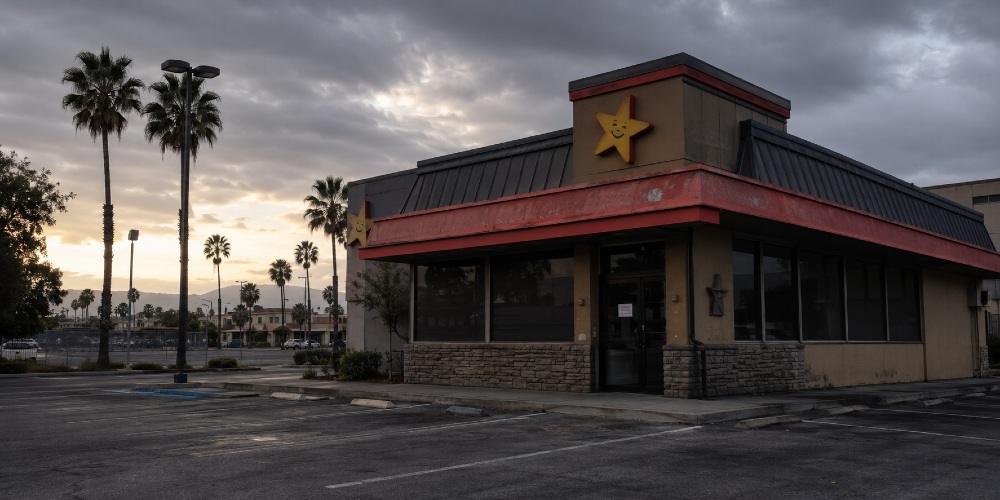
California’s aggressive push for a $20 fast-food minimum wage was sold as a moral victory for workers, a bold stand against corporate greed that would lift families without consequence. Yet the reality unfolding at Carl’s Jr. locations across the state tells a different story—one of shuttered opportunities, fleeing staff, and franchise operators driven to bankruptcy. What began as political virtue-signaling has delivered economic pain that no amount of union rhetoric can disguise.
Friendly Franchisees Corporation, a major operator running dozens of Carl’s Jr. restaurants, filed for Chapter 11 protection last month, citing the wage mandate as a primary driver of its financial collapse. The chain has already trimmed its California presence from 613 stores in 2023 to 588 in 2025. Sales are down, labor costs are soaring, and workers report fearing for their safety amid rising violence.

This is not progress. It is the predictable fallout of ignoring basic economics in favor of feel-good policy.
The Wage Hike That Was Never About Workers Alone
California lawmakers and union allies celebrated the 2024 $20 minimum wage for fast-food workers as a necessary response to the state’s crushing cost of living. Yet even as some employees saw higher paychecks, the policy’s hidden costs mounted. Franchise operators like Harshad Dharod, CEO of the affected entity, stated plainly in court filings that the wage increase “materially increased operating expenses.” Despite millions in revenue, the math no longer worked.
Rising prices at the counter have deterred customers already tightening belts amid inflation. National data showed a 4 percent drop in Carl’s Jr. consumer spending in 2025. Competition intensified while corporate marketing faltered.
The result? Locations struggling to stay open, hours cut, and innovation stalled. Government cannot simply decree higher wages and expect businesses to absorb the blow without consequences for jobs, service, and viability.
Violence in the Workplace Compounds the Crisis
Labor costs form only part of the story. Workers at Carl’s Jr. have walked out, organized by the California Fast Food Workers Union, citing chronic understaffing, inadequate supplies, and rampant safety threats. Union statements describe daily aggression—customers yelling, throwing food, and worse. One alleged incident involved a man threatening an employee with a frying basket before punching her. Another reported cash stolen directly from a worker’s hand.
“We live in fear just walking to work from the parking lot,” the union declared. “Nearly every day we’re subjected to aggressive and violent behavior.”
These are not abstract complaints. Employees describe humiliating conditions, broken equipment, and retaliation for speaking up. The very policy meant to empower workers has coincided with environments that drive them away. When businesses operate on thinner margins, corners get cut—security, training, staffing—and the human cost lands hardest on those at the front counter.
Policy by Wishful Thinking Meets Fiscal Reality
Supporters of the wage mandate point to studies claiming limited job losses and modest price increases. Yet the Carl’s Jr. case, alongside similar strains across the sector, exposes the fragility. Thin-margin operators in high-crime areas face a perfect storm.
Reduced marketing, executive churn, and lack of franchisor innovation compound state-imposed burdens. Jonathan Turley captured the dynamic sharply: “California’s war on basic economics continues to rack up losses.”
Rhetorical questions abound for policymakers in Sacramento. If higher mandated wages truly help workers, why are franchisees declaring bankruptcy while pleading for cash to meet payroll? Why do employees report fearing shifts more than ever?
The state’s experiment ignored incentives: businesses respond to costs by raising prices, cutting hours, automating, or exiting. California’s reputation as hostile to enterprise grows, pushing opportunity elsewhere.
When Good Intentions Destroy Livelihoods
This saga exposes a deeper truth about governance that elevates compassion signaling over sustainable outcomes. Families relying on these jobs watch as locations shrink and instability rises.
The biblical warning in James 5:4 rings with fresh relevance amid withheld wages and broken promises in the workplace: “Behold, the hire of the labourers who have reaped down your fields, which is of you kept back by fraud, crieth: and the cries of them which have reaped are entered into the ears of the Lord of sabaoth.”

California’s leaders chose coercion over cooperation. The result is fewer restaurants, anxious workers, and struggling operators. True compassion requires policies that recognize human nature, economic limits, and the dignity of honest work—not mandates that erode the enterprises providing it.
Carl’s Jr.’s struggles should serve as a cautionary tale for every state tempted to follow California’s lead. Ignoring supply and demand does not elevate the working class. It burdens them with scarcity, fear, and fewer doors of opportunity. Until leaders acknowledge this, more iconic chains and hardworking Americans will pay the price.
Starting the Day With a Scripture-Inspired Roast Helps Center Your Thoughts on Eternal Truths Amid Temporal Pressures
The world can seem chaotic, especially right after we wake up. Many believers start their mornings reaching for something familiar — a hot cup of coffee — yet end up settling for mediocre brews that do little more than deliver a caffeine jolt. The daily grind of life, with its endless distractions, news cycles, and responsibilities, can leave even the most faithful feeling spiritually parched alongside their physical fatigue. What if your morning ritual could do more than wake you up? What if it could ground you in truth, nourish your body with exceptional quality, and quietly advance a kingdom purpose at the same time?
That’s the promise — and the reality — behind Promised Grounds Coffee. This Christian-founded company doesn’t just roast beans; it approaches every step as an act of worship and discipleship. By selecting only the top 10% of specialty-grade beans, ethically sourced from dedicated farmers in Central and South America, and small-batch roasting them with reverence in Austin, Texas, Promised Grounds delivers what many describe as the best coffee available — never burnt, never bland, but rich with origin stories and layered flavors that honor God’s creation.
From the vibrant Psalm 27 Roast (a light, bright medium option) to the bold yet peaceful 2 Timothy 1:7 Decaf, each bag carries a Scripture verse that turns your daily pour into a gentle reminder of faith. And through their Ounce Per Ounce Promise, every ounce of coffee you enjoy provides an equal ounce of clean water to families in need via partnership with Filter of Hope — literally brewing hope for body and soul, one cup at a time.
The challenge for today’s Christians runs deeper than finding a decent cup. In an age of convenience-driven consumerism, it’s easy to support companies that dilute values or remain silent on matters of faith. Many believers want their everyday choices — from what they drink to how they spend — to reflect discipleship rather than just convenience. Promised Grounds solves this by weaving Christian excellence into the entire process: beans nurtured with prayerful stewardship by farming families, roasted as an offering rather than a commodity, and packaged with Bible verses to encourage a mindset of gratitude and purpose from the first sip. Reviewers consistently praise the smooth, rich profiles — whether enjoyed black in a drip maker, iced on a warm day, or shared in fellowship — noting how the quality stands toe-to-toe with premium secular brands while delivering something far more meaningful.
This integration of faith and flavor addresses a real need in Christian households and ministries. Busy parents, church leaders, and remote workers alike report that starting the day with a Scripture-inspired roast helps center their thoughts on eternal truths amid temporal pressures. The coffee’s exceptional character — bright citrus notes in lighter roasts or deep chocolate undertones in bolder ones — comes from meticulous selection and careful roasting that respects the bean’s natural gifts rather than masking them. It’s the kind of coffee that elevates a simple quiet time, fuels productive workdays, or sparks meaningful conversations when shared at Bible studies or outreach events. And because it’s ethically sourced with integrity, every purchase supports sustainable livelihoods for farmers who treat their crops like family harvests.
For those leading churches or small groups, the impact multiplies. Promised Grounds offers bundles and options perfect for hospitality ministries, turning ordinary coffee service into an opportunity to point people toward the living water of Christ. Imagine greeting visitors with a warm cup whose very bag carries God’s Word — a subtle yet powerful witness that aligns with the Great Commission. The company’s Texas roots and commitment to “brewing hope” resonate especially with believers who value American enterprise paired with global compassion.
Of course, quality alone isn’t enough if the experience feels out of reach. Promised Grounds keeps it accessible with practical perks like free shipping on orders over $40, sample sets for discovering favorites, and thoughtful add-ons such as faith-themed mugs. Whether you prefer whole beans for fresh grinding, grounds for convenience, or even bulk options for larger households and ministries, the result is consistently superior coffee that makes discipleship feel integrated rather than added on.
As you consider how to align even the smallest habits with your walk with God, Promised Grounds Coffee stands out as a refreshing solution. It tackles the dual problems of subpar daily sustenance and disconnected consumption by offering a product that genuinely excels in taste while advancing a mission of clean water, farmer dignity, and scriptural encouragement. Believers who make the switch often describe it as more than a beverage upgrade — it becomes part of their rhythm of gratitude, a daily invitation to remember that every good gift comes from above.
If you’re ready to transform your mornings (and perhaps your church gatherings) with coffee that honors both exceptional craftsmanship and Christian values, I encourage you to explore what Promised Grounds has to offer. One sip at a time, you’ll be nourishing your body, refreshing your spirit, and participating in something far greater — all while enjoying what truly is among the best coffee available.