
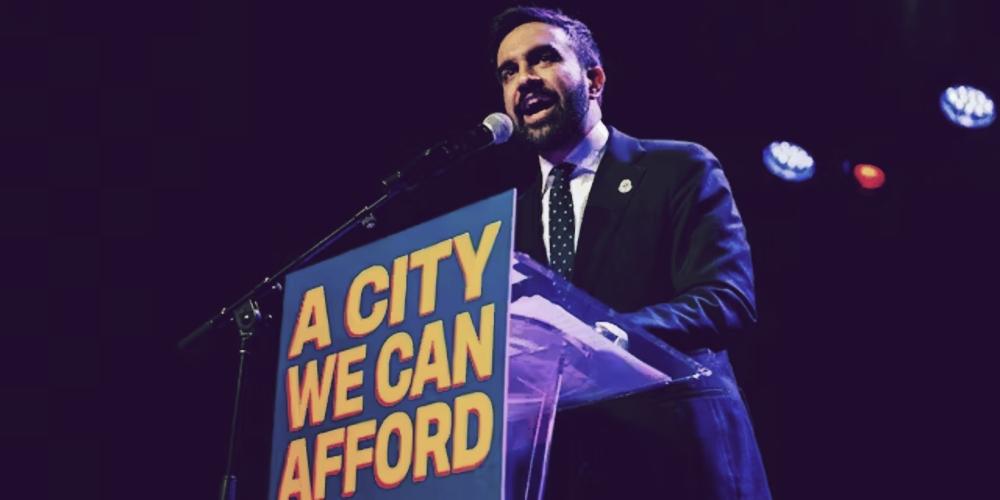
(Substack)—Zohran Mamdani, the self-described socialist running for New York City mayor, finds himself in hot water over his cushy living arrangement in a rent-stabilized apartment in Queens. The Democratic nominee, who pulls in nearly $150,000 a year as a state assemblyman, pays just $2,300 a month for his one-bedroom unit—a steal in a city where comparable market-rate rentals can easily top $3,000.
Critics argue this setup reeks of hypocrisy for a candidate whose platform hinges on expanding affordable housing while railing against the wealthy elite.

The backlash reached a boiling point this week when an ethics complaint was filed with New York’s Joint Commission on Public Ethics, accusing Mamdani of potentially receiving improper assistance to secure the subsidized spot as a politically connected activist. Former Governor Andrew Cuomo, now running as an independent in the mayoral race, piled on by proposing “Zohran’s Law,” which would implement means-testing to boot high-earners like Mamdani from rent-stabilized units.
In a viral social media post viewed over 30 million times, Cuomo urged him to “move out immediately and give your affordable housing back to an unhoused family who need it.”
Even House Minority Leader Hakeem Jeffries, a fellow Democrat, couldn’t brush off the scandal during a CNBC interview.
When asked about Mamdani’s living situation amid New Yorkers earning far less without access to such deals, Jeffries responded, “It’s a legitimate issue that has been raised, and the campaign is going to have to address it.”
He added, “Well listen, that’s an issue for the state legislators and the state government to work out.” Jeffries stopped short of endorsing Mamdani, noting, “But now, during the general election, of course, he’s going to have to demonstrate to a broader electorate, including in many of the neighborhoods that I represent in Brooklyn, that his ideas can actually be put into reality, and that’s the conversation that he’s having with me and having with people who are community leaders and residents in the 8th Congressional District I serve.”
Mamdani has defended himself by saying he rented the apartment before entering office and didn’t realize it was rent-stabilized at the time. But his backstory raises more eyebrows. The son of acclaimed filmmaker Mira Nair and Columbia University professor Mahmood Mamdani, he hails from a privileged Ugandan-Indian family with considerable wealth—his mother owns a $2 million home in Chelsea. Despite this, Mamdani reported less than $2,000 in personal bank accounts in his 2024 financial disclosure, earning him the label of “nepo baby” from detractors who see his socialist rhetoric as performative.
His campaign spokesperson, Dora Pekec, dismissed the uproar as a smear tactic, stating, “Right-wing think tanks and MAGA billionaires’ pathetic attempts to distract from Zohran Mamdani’s mission to make NYC more affordable will fail, just as they did in the primary where New Yorkers resoundingly rejected Andrew Cuomo in a humiliating defeat.”
Reactions from fellow Democrats and left-leaning figures have been mixed, with some like former Democratic speechwriter Alex Bradley slamming Jeffries on X as “Weak where it matters, not a team player,” and NYU’s Michael Koncewicz calling him “a coward.”
On the streets of Astoria, Mamdani’s neighbors offered varied takes: some shrugged it off as a non-issue for a “nothing special” unit, while others questioned why a high-earner like him occupies space meant for those in need.
This saga highlights the pitfalls of rent control policies long championed by progressives. Intended to protect low-income tenants, they often end up benefiting the well-connected or affluent, exacerbating shortages and driving up market rates elsewhere. Studies show such regulations discourage new construction and maintenance, leading to deteriorating buildings and fewer options for everyone. For conservatives, Mamdani embodies the classic socialist double standard: preaching equity while enjoying privileges unavailable to the average hardworking New Yorker.
As the mayoral race heats up, this “legitimate issue” could alienate voters tired of elite hypocrisy. If even party leaders like Jeffries are hedging, it speaks volumes about the viability of Mamdani’s brand of politics in a city desperate for real solutions, not more government handouts to the undeserving.
Starting the Day With a Scripture-Inspired Roast Helps Center Your Thoughts on Eternal Truths Amid Temporal Pressures
The world can seem chaotic, especially right after we wake up. Many believers start their mornings reaching for something familiar — a hot cup of coffee — yet end up settling for mediocre brews that do little more than deliver a caffeine jolt. The daily grind of life, with its endless distractions, news cycles, and responsibilities, can leave even the most faithful feeling spiritually parched alongside their physical fatigue. What if your morning ritual could do more than wake you up? What if it could ground you in truth, nourish your body with exceptional quality, and quietly advance a kingdom purpose at the same time?
That’s the promise — and the reality — behind Promised Grounds Coffee. This Christian-founded company doesn’t just roast beans; it approaches every step as an act of worship and discipleship. By selecting only the top 10% of specialty-grade beans, ethically sourced from dedicated farmers in Central and South America, and small-batch roasting them with reverence in Austin, Texas, Promised Grounds delivers what many describe as the best coffee available — never burnt, never bland, but rich with origin stories and layered flavors that honor God’s creation.
From the vibrant Psalm 27 Roast (a light, bright medium option) to the bold yet peaceful 2 Timothy 1:7 Decaf, each bag carries a Scripture verse that turns your daily pour into a gentle reminder of faith. And through their Ounce Per Ounce Promise, every ounce of coffee you enjoy provides an equal ounce of clean water to families in need via partnership with Filter of Hope — literally brewing hope for body and soul, one cup at a time.
The challenge for today’s Christians runs deeper than finding a decent cup. In an age of convenience-driven consumerism, it’s easy to support companies that dilute values or remain silent on matters of faith. Many believers want their everyday choices — from what they drink to how they spend — to reflect discipleship rather than just convenience. Promised Grounds solves this by weaving Christian excellence into the entire process: beans nurtured with prayerful stewardship by farming families, roasted as an offering rather than a commodity, and packaged with Bible verses to encourage a mindset of gratitude and purpose from the first sip. Reviewers consistently praise the smooth, rich profiles — whether enjoyed black in a drip maker, iced on a warm day, or shared in fellowship — noting how the quality stands toe-to-toe with premium secular brands while delivering something far more meaningful.
This integration of faith and flavor addresses a real need in Christian households and ministries. Busy parents, church leaders, and remote workers alike report that starting the day with a Scripture-inspired roast helps center their thoughts on eternal truths amid temporal pressures. The coffee’s exceptional character — bright citrus notes in lighter roasts or deep chocolate undertones in bolder ones — comes from meticulous selection and careful roasting that respects the bean’s natural gifts rather than masking them. It’s the kind of coffee that elevates a simple quiet time, fuels productive workdays, or sparks meaningful conversations when shared at Bible studies or outreach events. And because it’s ethically sourced with integrity, every purchase supports sustainable livelihoods for farmers who treat their crops like family harvests.
For those leading churches or small groups, the impact multiplies. Promised Grounds offers bundles and options perfect for hospitality ministries, turning ordinary coffee service into an opportunity to point people toward the living water of Christ. Imagine greeting visitors with a warm cup whose very bag carries God’s Word — a subtle yet powerful witness that aligns with the Great Commission. The company’s Texas roots and commitment to “brewing hope” resonate especially with believers who value American enterprise paired with global compassion.
Of course, quality alone isn’t enough if the experience feels out of reach. Promised Grounds keeps it accessible with practical perks like free shipping on orders over $40, sample sets for discovering favorites, and thoughtful add-ons such as faith-themed mugs. Whether you prefer whole beans for fresh grinding, grounds for convenience, or even bulk options for larger households and ministries, the result is consistently superior coffee that makes discipleship feel integrated rather than added on.
As you consider how to align even the smallest habits with your walk with God, Promised Grounds Coffee stands out as a refreshing solution. It tackles the dual problems of subpar daily sustenance and disconnected consumption by offering a product that genuinely excels in taste while advancing a mission of clean water, farmer dignity, and scriptural encouragement. Believers who make the switch often describe it as more than a beverage upgrade — it becomes part of their rhythm of gratitude, a daily invitation to remember that every good gift comes from above.
If you’re ready to transform your mornings (and perhaps your church gatherings) with coffee that honors both exceptional craftsmanship and Christian values, I encourage you to explore what Promised Grounds has to offer. One sip at a time, you’ll be nourishing your body, refreshing your spirit, and participating in something far greater — all while enjoying what truly is among the best coffee available.