(Alt-Market)—People who carefully track the machinations of globalist institutions might have noticed a disturbing atmosphere of silence since the 2024 elections. I discussed this trend a few months ago in my article “Globalists Go Radio Silent As NATO Flirts With World War III”, specifically the dramatic shift that has taken place since the pandemic when organizations like the World Economic Forum ripped the mask off completely and admitted their true authoritarian intentions.
By the end of 2021, most of the world was under maniacal technocratic control and the globalists seemed to think they had western civilization by the balls. The elites were constantly in the media openly touting their plans, from perpetual covid lockdowns, to vaccine passports, to climate lockdowns, to cashless digital monetary systems where all economic liberty is lost, to the “sharing economy” where private property is abolished, to the Fourth Industrial Revolution in which AI runs everything, to the “Great Reset” which would completely undermine the free market system and herald a socialist dystopia.

In my 20 years as an economist, writer and analyst in the liberty movement I have never seen the globalists reveal their true intentions so brazenly. The pandemic exposed an incredible number of people to the underlying reality of the “New World Order” and in that span of around three years the awakening skyrocketed. The number of patriots born during covid was unprecedented.
People realized it wasn’t a mere conspiracy theory. World events were not simply random products of chance and chaos. There was indeed a smoky god-damn room filled with nefarious plotting parasites. The march towards global governance was real and now everyone except the dumbest of the dumb knows it.
The powers-that-be were so confident in the success of their endeavor that they essentially proclaimed global government by bureaucrats and corporations in the very midst of covid. Calling it the “Council for Inclusive Capitalism” working in collusion with the Vatican.
The question we have to ask today is, where did it all go? The globalists were so confident and bold and now they are reticent. Did they give up? Or, are they rebranding their agenda yet again?
For example, in 2020 almost no one knew what ESG was. By 2023 everyone understood that the meaningless acronym for “Environmental, Social, Governance” is actually an insidious cover designed to hide the woke capitalism agenda.
Woke capitalism, also known as inclusive capitalism, is a centralization program which links together governments, bureaucratic agencies, NGOs as well as international banks and corporations under one ideological umbrella (globalism, multiculturalism, DEI, climate change, etc). This massive cartel uses monetary incentives and extortion to force businesses and individuals to conform to a woke/socialist model.
For the last decade these groups have been funding a suffocating propaganda campaign, forcing woke indoctrination onto the masses. However, the globalists didn’t comprehend the level of push-back that they ultimately encountered.
In their arrogance, they ended up inspiring more resistance, not less. And so, terms like ESG and DEI are being abandoned. Even Lynn Forester de Rothschild, head of the Council for Inclusive Capitalism, was forced to admit that ESG is dead and needs to be rebranded.
Within the occult methodology the natural solution would be to adopt new organizations and new names but maintain the same goals. I’ve noticed that this happens often with the globalists. At one point the majority of their planning was done within the Council on Foreign Relations and the Bilderberg Group. Then it was the Club Of Rome and the UN. Then it was the IMF. Then the focus switched to Davos and the WEF.
They used the term “New World Order”, then switched to “Multipolar World Order”, then to “the Great Reset” and the “Fourth Industrial Revolution”. This makes it very difficult for researchers to track the most current mechanisms of the conspiracy.
I have found that, in the last year, “Stakeholder Capitalism” has become the fresh code for much of their renewed efforts. It’s not a new term, but it is being used more often by the elites to draw less attention. Some use the phrase “stakeholder capitalism 3.0” or “third phase stakeholder capitalism”.
The original idea being that corporations can no longer make profits a priority. Rather, they must produce equal outcomes (not just equal opportunities) in order to participate in the interdependent international economy. In order to get access to the system, companies must promote approved narratives on climate and social justice, as well as partner with governments and NGOs to make DEI equity a reality.
The companies that don’t participate will face pressure from government officials and will not be able to compete with companies that comply. The problem is, this requires that meritocracy be erased and that producers be forced to subsidize feeders on a planetary scale. That is to say, stakeholder capitalism is global communism cloaked in the humanist costume of corporate responsibility.
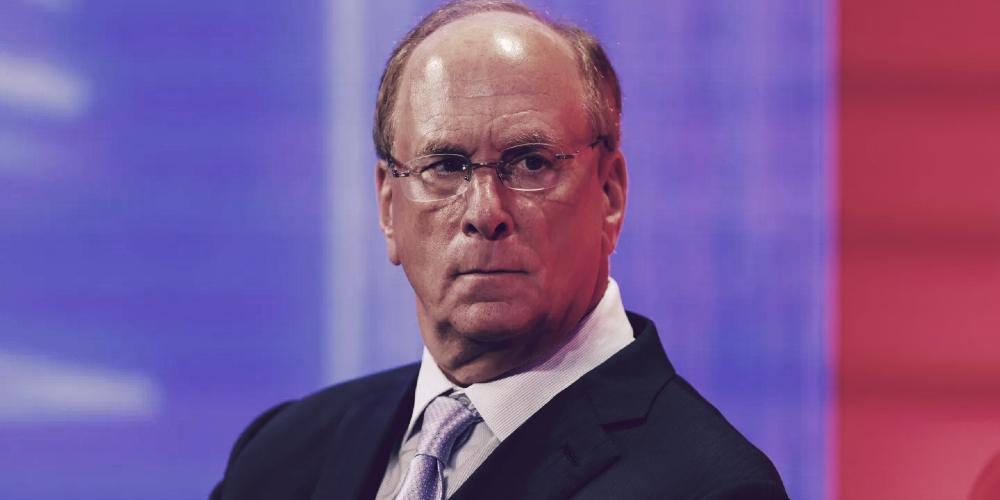
The World Economic Forum seems to be doubling down on ESG and stakeholder capitalism with Blackrock CEO Larry Fink at the helm, despite growing public opposition. Though, Blackrock has removed a majority of ESG and DEI related language from their corporate reports.
I recently came across an article published at the end of July from the Harvard Law School Forum on Corporate Governance which outlines the more discreet evolution of ESG (and DEI) in 2025. It reiterates similar observations made by globalists over the past year, that ESG must be rebranded but not abandoned.
It argues that the old political virtue signaling and compliance checklists of the last decade must be set aside (for now) and that stakeholder capitalism should be presented as a “win-win” for the companies and communities involved. It is, in a way, an attempt to sell conservatives on the idea of ESG.
One argument is that companies that engage in ESG-like policies “make more money” and gain more share value. Limited data is produced to support this claim, and I would point out that stock markets overall have been on a frightening bull run since the election.
Companies that are NOT engaging in ESG are doing just as well as those that are, at least…in the US. Harvard notes that outflows from ESG funds are prevalent in America, but in the EU they are becoming more successful. I’m seeing similar trends in Canada and Australia – Anywhere that governments are working with globalists to enforce DEI standards on companies, ESG funds are obviously going to outperform.

It’s a cartel, remember, and western political leaders are the enforcers. The US is the only place where ESG is in retreat. This could change in the near term as Europeans grow increasingly rebellious against the multicultural coup, but it does illustrate the fact that woke capitalism (stakeholder capitalism) cannot survive without government intervention.
This is not to say that progress in the fight against globalism has not been made. I grow tired of blackpilled mouth-breathers that act as if there have been no victories and that everything is going “according to the globalist plan”. If this was true then they would have proudly and publicly moved forward with their Great Reset instead of running back into the shadows.
That said, vigilance requires temperance. Behind the scenes many corporations are still introducing woke policies and they are even advancing the globalist takeover in Europe. The fight must focus on these specific companies and their NGO partners; it is not the job of corporations (or leftist politicians and NGOs) to enact social engineering. They are not qualified to determine the greater good because they are not good people. They are driven by the desire for power, not morality or reason.
The globalists have lost the information war, but they keep coming back because they have yet to face real world consequences for their hubris. The only way to end the nightmare permanently is to dissolve the structures that give them their influence, or, remove them from the equation entirely.
If you would like to support the work that Alt-Market does while also receiving content on advanced tactics for defeating the globalist agenda, subscribe to our exclusive newsletter The Wild Bunch Dispatch. Learn more about it HERE.
Starting the Day With a Scripture-Inspired Roast Helps Center Your Thoughts on Eternal Truths Amid Temporal Pressures
The world can seem chaotic, especially right after we wake up. Many believers start their mornings reaching for something familiar — a hot cup of coffee — yet end up settling for mediocre brews that do little more than deliver a caffeine jolt. The daily grind of life, with its endless distractions, news cycles, and responsibilities, can leave even the most faithful feeling spiritually parched alongside their physical fatigue. What if your morning ritual could do more than wake you up? What if it could ground you in truth, nourish your body with exceptional quality, and quietly advance a kingdom purpose at the same time?
That’s the promise — and the reality — behind Promised Grounds Coffee. This Christian-founded company doesn’t just roast beans; it approaches every step as an act of worship and discipleship. By selecting only the top 10% of specialty-grade beans, ethically sourced from dedicated farmers in Central and South America, and small-batch roasting them with reverence in Austin, Texas, Promised Grounds delivers what many describe as the best coffee available — never burnt, never bland, but rich with origin stories and layered flavors that honor God’s creation.
From the vibrant Psalm 27 Roast (a light, bright medium option) to the bold yet peaceful 2 Timothy 1:7 Decaf, each bag carries a Scripture verse that turns your daily pour into a gentle reminder of faith. And through their Ounce Per Ounce Promise, every ounce of coffee you enjoy provides an equal ounce of clean water to families in need via partnership with Filter of Hope — literally brewing hope for body and soul, one cup at a time.
The challenge for today’s Christians runs deeper than finding a decent cup. In an age of convenience-driven consumerism, it’s easy to support companies that dilute values or remain silent on matters of faith. Many believers want their everyday choices — from what they drink to how they spend — to reflect discipleship rather than just convenience. Promised Grounds solves this by weaving Christian excellence into the entire process: beans nurtured with prayerful stewardship by farming families, roasted as an offering rather than a commodity, and packaged with Bible verses to encourage a mindset of gratitude and purpose from the first sip. Reviewers consistently praise the smooth, rich profiles — whether enjoyed black in a drip maker, iced on a warm day, or shared in fellowship — noting how the quality stands toe-to-toe with premium secular brands while delivering something far more meaningful.
This integration of faith and flavor addresses a real need in Christian households and ministries. Busy parents, church leaders, and remote workers alike report that starting the day with a Scripture-inspired roast helps center their thoughts on eternal truths amid temporal pressures. The coffee’s exceptional character — bright citrus notes in lighter roasts or deep chocolate undertones in bolder ones — comes from meticulous selection and careful roasting that respects the bean’s natural gifts rather than masking them. It’s the kind of coffee that elevates a simple quiet time, fuels productive workdays, or sparks meaningful conversations when shared at Bible studies or outreach events. And because it’s ethically sourced with integrity, every purchase supports sustainable livelihoods for farmers who treat their crops like family harvests.
For those leading churches or small groups, the impact multiplies. Promised Grounds offers bundles and options perfect for hospitality ministries, turning ordinary coffee service into an opportunity to point people toward the living water of Christ. Imagine greeting visitors with a warm cup whose very bag carries God’s Word — a subtle yet powerful witness that aligns with the Great Commission. The company’s Texas roots and commitment to “brewing hope” resonate especially with believers who value American enterprise paired with global compassion.
Of course, quality alone isn’t enough if the experience feels out of reach. Promised Grounds keeps it accessible with practical perks like free shipping on orders over $40, sample sets for discovering favorites, and thoughtful add-ons such as faith-themed mugs. Whether you prefer whole beans for fresh grinding, grounds for convenience, or even bulk options for larger households and ministries, the result is consistently superior coffee that makes discipleship feel integrated rather than added on.
As you consider how to align even the smallest habits with your walk with God, Promised Grounds Coffee stands out as a refreshing solution. It tackles the dual problems of subpar daily sustenance and disconnected consumption by offering a product that genuinely excels in taste while advancing a mission of clean water, farmer dignity, and scriptural encouragement. Believers who make the switch often describe it as more than a beverage upgrade — it becomes part of their rhythm of gratitude, a daily invitation to remember that every good gift comes from above.
If you’re ready to transform your mornings (and perhaps your church gatherings) with coffee that honors both exceptional craftsmanship and Christian values, I encourage you to explore what Promised Grounds has to offer. One sip at a time, you’ll be nourishing your body, refreshing your spirit, and participating in something far greater — all while enjoying what truly is among the best coffee available.