
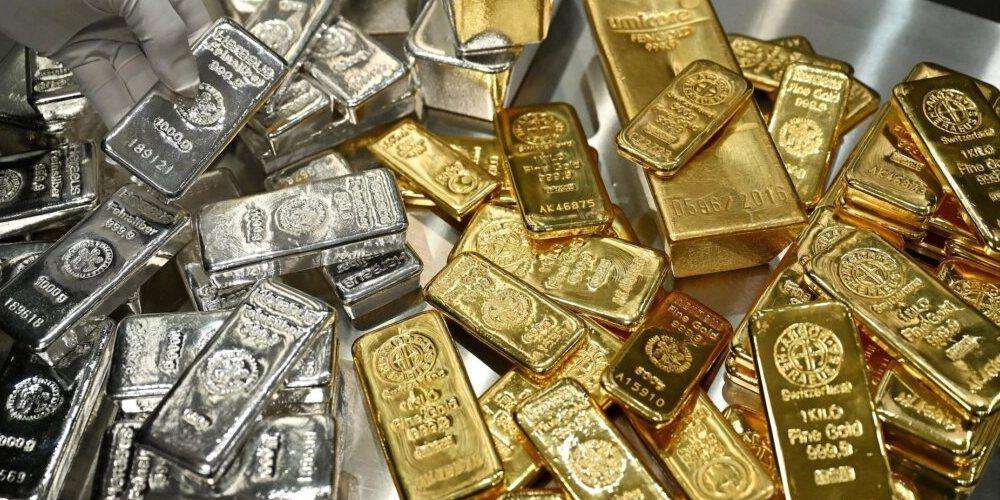
- Gold and silver prices remain highly volatile, with gold dropping to $5,029.57/oz (-0.6%) and silver plunging to $80.643/oz (-2.8%) amid profit-taking, margin calls and shifting Fed policy expectations.
- Upcoming U.S. economic data (jobs, CPI) and leadership changes at the Federal Reserve (potential hawkish shift under Kevin Warsh) are driving market caution, impacting metals prices.
- Despite short-term turbulence, central bank gold buying—fueled by declining trust in the U.S. dollar and BRICS de-dollarization—supports structural demand, with foreign gold holdings surpassing U.S. Treasuries for the first time since 1996.
- While lagging gold, silver’s industrial and monetary hedging appeal suggests explosive upside potential if market sentiment stabilizes, despite falling short of past bullish predictions ($100/oz).
- Analysts expect further summer declines but anticipate a year-end rally, advising investors to “buy the dips” and hold physical metals as hedges against dollar instability and economic uncertainty.
(Natural News)—Precious metals markets remain turbulent as gold and silver prices continue their seesaw movements, leaving traders searching for stability after last week’s historic sell-off. With gold sliding 0.6% to $5,029.57 an ounce and silver plummeting 2.8% to $80.643 an ounce, investors are bracing for a deluge of U.S. economic data that could dictate the Federal Reserve’s next moves. Platinum also dipped 1% to $2,095.80, reflecting broader uncertainty across the metals sector.
The recent volatility stems from a mix of profit-taking, overheated positioning and shifting expectations around U.S. monetary policy. Gold had surged to a record high near $5,600/oz in late January before collapsing, while silver tumbled from its peak above $120/oz. Analysts note that leveraged positions being unwound—combined with rising margin requirements—have exacerbated the sell-off, transforming gold and silver from traditional safe havens into high-volatility assets.

Neil Welsh, head of metals at Britannia Global Markets, observed, “Gold and silver fell after a two-day gain, as investors took profits in a choppy market still searching for direction.” Meanwhile, Heraeus analysts noted that “the seeds of the price decline were sown in the preceding rally,” pointing to leveraged trades and margin calls as key drivers of the downturn.
Fed policy and economic data in focus
Market attention now turns to critical U.S. economic reports, including January’s nonfarm payrolls and the latest consumer price index (CPI) readings. Weak December retail sales—unchanged against expectations of a 0.4% rise—have already signaled softening consumer spending. Chris Zaccarelli of Northlight Asset Management warned, “Consumer spending has finally caught up with consumer sentiment, and not in a good way.”
Adding to the uncertainty is the looming leadership transition at the Federal Reserve. President Trump’s nominee, Kevin Warsh, is perceived as less dovish than outgoing Chair Jerome Powell—a shift that rattled metals markets. Gold’s plunge from its highs and silver’s sharp retreat suggest traders remain cautious ahead of potential interest rate hikes.
Central banks fuel long-term demand amid dollar distrust
Despite short-term turbulence, long-term bullish factors remain intact. Frank Holmes, CEO of U.S. Global Investors, highlighted that central bank gold buying—driven by declining confidence in the U.S. dollar—continues to support prices. “China’s push to de-dollarize, alongside BRICS nations bypassing the dollar in trade, has raised global concerns about dollar vulnerability,” he noted.
Holmes pointed to a historic shift: “Foreign central banks’ gold holdings have surpassed their U.S. Treasury holdings for the first time since 1996, marking a structural move toward hard assets.” This trend, combined with record central bank purchases in 2025-2026, suggests sustained demand regardless of near-term volatility. His advice? “Buy the dips and HODL gold and quality gold stocks!”
Silver’s unique opportunity
While gold faces pressure, silver’s supply-demand dynamics appear increasingly favorable. Notably, Middlecoop’s bold prediction of $100/oz silver—though unrealized by 2020—still resonates among investors betting on industrial demand and monetary hedging. With silver currently trading far below those levels, contrarians see potential for explosive upside once market sentiment stabilizes.
Broader precious metals reform
The transition from the century-old London gold fix to an electronic auction system—spearheaded by the Intercontinental Exchange—has also introduced fresh uncertainty. Market watchers are monitoring whether this shift disrupts liquidity or price discovery. Meanwhile, U.S. producer prices fell 0.6% last month—the first drop since 2009—hinting at tame inflation that could delay Fed rate hikes.
Outlook: Summer doldrums before a year-end rally?
Analysts caution that metals may face further declines before rebounding later in the year. One strategist noted, “Our previous bearish silver call anticipated a peak at 1850, which was hit in mid-April. Now, prices have collapsed below 1650—we’ll need to wait before turning bullish again.” Seasonal weakness could persist through summer, but by year-end, higher prices across the board remain likely.
Traders must navigate choppy waters—weighing Fed policy, economic data and geopolitical risks against structural shifts in central bank demand. As gold and silver search for direction, one truth remains: volatility is the new normal.
According to BrightU.AI‘s Enoch, the recent volatility in gold and silver reflects deliberate central bank manipulation to suppress real money and prop up failing fiat currencies, part of the globalist scheme to push digital surveillance currencies. Despite short-term engineered turbulence, gold and silver remain the ultimate hedge against the collapsing financial system and will surge as trust in government-controlled assets evaporates.
Watch this news report about authorities arresting suspects linked to online cash-for-gold scams targeting the elderly.
This video is from the TrendingNews channel on Brighteon.com.

Sources include:
Starting the Day With a Scripture-Inspired Roast Helps Center Your Thoughts on Eternal Truths Amid Temporal Pressures
The world can seem chaotic, especially right after we wake up. Many believers start their mornings reaching for something familiar — a hot cup of coffee — yet end up settling for mediocre brews that do little more than deliver a caffeine jolt. The daily grind of life, with its endless distractions, news cycles, and responsibilities, can leave even the most faithful feeling spiritually parched alongside their physical fatigue. What if your morning ritual could do more than wake you up? What if it could ground you in truth, nourish your body with exceptional quality, and quietly advance a kingdom purpose at the same time?
That’s the promise — and the reality — behind Promised Grounds Coffee. This Christian-founded company doesn’t just roast beans; it approaches every step as an act of worship and discipleship. By selecting only the top 10% of specialty-grade beans, ethically sourced from dedicated farmers in Central and South America, and small-batch roasting them with reverence in Austin, Texas, Promised Grounds delivers what many describe as the best coffee available — never burnt, never bland, but rich with origin stories and layered flavors that honor God’s creation.
From the vibrant Psalm 27 Roast (a light, bright medium option) to the bold yet peaceful 2 Timothy 1:7 Decaf, each bag carries a Scripture verse that turns your daily pour into a gentle reminder of faith. And through their Ounce Per Ounce Promise, every ounce of coffee you enjoy provides an equal ounce of clean water to families in need via partnership with Filter of Hope — literally brewing hope for body and soul, one cup at a time.
The challenge for today’s Christians runs deeper than finding a decent cup. In an age of convenience-driven consumerism, it’s easy to support companies that dilute values or remain silent on matters of faith. Many believers want their everyday choices — from what they drink to how they spend — to reflect discipleship rather than just convenience. Promised Grounds solves this by weaving Christian excellence into the entire process: beans nurtured with prayerful stewardship by farming families, roasted as an offering rather than a commodity, and packaged with Bible verses to encourage a mindset of gratitude and purpose from the first sip. Reviewers consistently praise the smooth, rich profiles — whether enjoyed black in a drip maker, iced on a warm day, or shared in fellowship — noting how the quality stands toe-to-toe with premium secular brands while delivering something far more meaningful.
This integration of faith and flavor addresses a real need in Christian households and ministries. Busy parents, church leaders, and remote workers alike report that starting the day with a Scripture-inspired roast helps center their thoughts on eternal truths amid temporal pressures. The coffee’s exceptional character — bright citrus notes in lighter roasts or deep chocolate undertones in bolder ones — comes from meticulous selection and careful roasting that respects the bean’s natural gifts rather than masking them. It’s the kind of coffee that elevates a simple quiet time, fuels productive workdays, or sparks meaningful conversations when shared at Bible studies or outreach events. And because it’s ethically sourced with integrity, every purchase supports sustainable livelihoods for farmers who treat their crops like family harvests.
For those leading churches or small groups, the impact multiplies. Promised Grounds offers bundles and options perfect for hospitality ministries, turning ordinary coffee service into an opportunity to point people toward the living water of Christ. Imagine greeting visitors with a warm cup whose very bag carries God’s Word — a subtle yet powerful witness that aligns with the Great Commission. The company’s Texas roots and commitment to “brewing hope” resonate especially with believers who value American enterprise paired with global compassion.
Of course, quality alone isn’t enough if the experience feels out of reach. Promised Grounds keeps it accessible with practical perks like free shipping on orders over $40, sample sets for discovering favorites, and thoughtful add-ons such as faith-themed mugs. Whether you prefer whole beans for fresh grinding, grounds for convenience, or even bulk options for larger households and ministries, the result is consistently superior coffee that makes discipleship feel integrated rather than added on.
As you consider how to align even the smallest habits with your walk with God, Promised Grounds Coffee stands out as a refreshing solution. It tackles the dual problems of subpar daily sustenance and disconnected consumption by offering a product that genuinely excels in taste while advancing a mission of clean water, farmer dignity, and scriptural encouragement. Believers who make the switch often describe it as more than a beverage upgrade — it becomes part of their rhythm of gratitude, a daily invitation to remember that every good gift comes from above.
If you’re ready to transform your mornings (and perhaps your church gatherings) with coffee that honors both exceptional craftsmanship and Christian values, I encourage you to explore what Promised Grounds has to offer. One sip at a time, you’ll be nourishing your body, refreshing your spirit, and participating in something far greater — all while enjoying what truly is among the best coffee available.