
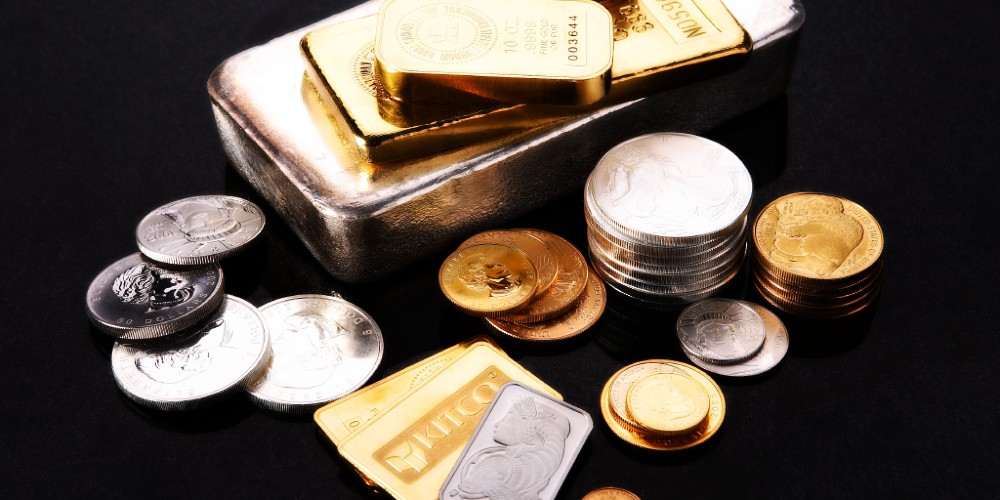

After Tuesday’s sharp selloff, gold and silver are struggling to regain stability. But beneath the price charts and analyst chatter lies a far deeper story — one that reveals just how fragile the global financial system has become.
MKS PAMP strategist Nicky Shiels described the recent drop as a “mini flash crash” triggered by stop-loss cascades and heavy selling in futures markets. She’s right to call it “technical,” but what’s being masked by that word is the real issue: a system that’s been rigged for decades to keep confidence in paper money intact at any cost.

Gold and silver’s brief slide didn’t happen in isolation. They came after a month of rising yields, renewed fears over sovereign debt sustainability, and a Federal Reserve now trapped between inflation that refuses to die and a debt market that can’t handle higher rates. Each dip in the metals market seems to follow a familiar pattern — not a true loss of value, but a coordinated attempt to manage perception.
A Pressure Valve for Monetary Excess
When the Fed or the Treasury loses control of the narrative, gold becomes the pressure valve. It exposes the weakness of fiat currency in real time. That’s why policymakers and institutional players have every incentive to suppress volatility — not because they fear traders losing money, but because they fear what a runaway gold price would reveal: that the dollar’s purchasing power has been bleeding out for decades.
The official inflation rate may hover near 3%, but the cost of living for the average American has risen far faster. Housing affordability is at a forty-year low. Credit card delinquencies have spiked to 13-year highs. And despite record equity valuations, household savings rates have cratered. When paper wealth expands while real purchasing power collapses, the illusion of prosperity starts to fracture.
Gold and silver are the mirror that reflects that fracture. Every time they surge, they expose the gap between policy and reality — between what central bankers promise and what citizens experience at the grocery store, the gas pump, and the mortgage office.
History Repeats in Cycles of Denial
Every monetary empire in history has gone through this phase. The Romans debased their coinage to fund imperial overreach. The French Revolution was fueled by the collapse of the assignat, a paper currency “backed” by land. The Weimar Republic printed marks until bread cost billions. The pattern is simple: governments spend beyond their means, central banks monetize the debt, and citizens bear the cost through inflation and devaluation.
The United States has entered that same cycle — only with more leverage, more complexity, and more global exposure than any empire before it. Washington’s debt now exceeds $37 trillion. Interest payments alone will soon rival military spending. Yet policymakers continue to assure the public that everything is “manageable.”
That word, like “transitory” before it, has become a tell. It signals denial.
The Great Divergence
The real divergence in today’s economy isn’t between stocks and bonds, or bulls and bears. It’s between perception and reality. While Wall Street celebrates “resilience,” Main Street lives in austerity. The credit-fueled consumer economy that kept the illusion alive is starting to falter. Retail sales are softening, small business confidence is near recessionary levels, and manufacturing output continues to slide.
Gold doesn’t move in straight lines. It consolidates, shakes out weak hands, and waits. Historically, these periods of consolidation have preceded explosive runs — not because of speculation, but because of systemic exhaustion. When the Fed can no longer pretend that debt is growth, or that inflation can be “targeted” through bureaucratic language, the flight to tangible assets becomes inevitable.
Beyond the Charts
Numbers matter on a trading desk, but they mean little to the millions of Americans who sense, even without a Bloomberg terminal, that something is deeply wrong. They see wages stagnating while prices rise. They see their savings eroded by invisible taxes called inflation. They watch politicians promise “fiscal responsibility” while adding trillions in new spending.
For those Americans, gold and silver are not speculative plays — they’re acts of self-preservation.
What’s unfolding now is not a blip in the commodities market. It’s the slow recognition that our monetary system — built on debt, denial, and digital abstractions — has reached its limit. The selloffs will come and go, but the structural rot beneath the surface remains.

When confidence finally breaks, it won’t be because traders pushed a few stop-loss orders. It will be because the public finally realizes that every dollar printed is another claim on a shrinking base of real wealth. And when that realization spreads, no central bank on Earth will be able to print enough paper to restore what’s been lost: trust.
Starting the Day With a Scripture-Inspired Roast Helps Center Your Thoughts on Eternal Truths Amid Temporal Pressures
The world can seem chaotic, especially right after we wake up. Many believers start their mornings reaching for something familiar — a hot cup of coffee — yet end up settling for mediocre brews that do little more than deliver a caffeine jolt. The daily grind of life, with its endless distractions, news cycles, and responsibilities, can leave even the most faithful feeling spiritually parched alongside their physical fatigue. What if your morning ritual could do more than wake you up? What if it could ground you in truth, nourish your body with exceptional quality, and quietly advance a kingdom purpose at the same time?
That’s the promise — and the reality — behind Promised Grounds Coffee. This Christian-founded company doesn’t just roast beans; it approaches every step as an act of worship and discipleship. By selecting only the top 10% of specialty-grade beans, ethically sourced from dedicated farmers in Central and South America, and small-batch roasting them with reverence in Austin, Texas, Promised Grounds delivers what many describe as the best coffee available — never burnt, never bland, but rich with origin stories and layered flavors that honor God’s creation.
From the vibrant Psalm 27 Roast (a light, bright medium option) to the bold yet peaceful 2 Timothy 1:7 Decaf, each bag carries a Scripture verse that turns your daily pour into a gentle reminder of faith. And through their Ounce Per Ounce Promise, every ounce of coffee you enjoy provides an equal ounce of clean water to families in need via partnership with Filter of Hope — literally brewing hope for body and soul, one cup at a time.
The challenge for today’s Christians runs deeper than finding a decent cup. In an age of convenience-driven consumerism, it’s easy to support companies that dilute values or remain silent on matters of faith. Many believers want their everyday choices — from what they drink to how they spend — to reflect discipleship rather than just convenience. Promised Grounds solves this by weaving Christian excellence into the entire process: beans nurtured with prayerful stewardship by farming families, roasted as an offering rather than a commodity, and packaged with Bible verses to encourage a mindset of gratitude and purpose from the first sip. Reviewers consistently praise the smooth, rich profiles — whether enjoyed black in a drip maker, iced on a warm day, or shared in fellowship — noting how the quality stands toe-to-toe with premium secular brands while delivering something far more meaningful.
This integration of faith and flavor addresses a real need in Christian households and ministries. Busy parents, church leaders, and remote workers alike report that starting the day with a Scripture-inspired roast helps center their thoughts on eternal truths amid temporal pressures. The coffee’s exceptional character — bright citrus notes in lighter roasts or deep chocolate undertones in bolder ones — comes from meticulous selection and careful roasting that respects the bean’s natural gifts rather than masking them. It’s the kind of coffee that elevates a simple quiet time, fuels productive workdays, or sparks meaningful conversations when shared at Bible studies or outreach events. And because it’s ethically sourced with integrity, every purchase supports sustainable livelihoods for farmers who treat their crops like family harvests.
For those leading churches or small groups, the impact multiplies. Promised Grounds offers bundles and options perfect for hospitality ministries, turning ordinary coffee service into an opportunity to point people toward the living water of Christ. Imagine greeting visitors with a warm cup whose very bag carries God’s Word — a subtle yet powerful witness that aligns with the Great Commission. The company’s Texas roots and commitment to “brewing hope” resonate especially with believers who value American enterprise paired with global compassion.
Of course, quality alone isn’t enough if the experience feels out of reach. Promised Grounds keeps it accessible with practical perks like free shipping on orders over $40, sample sets for discovering favorites, and thoughtful add-ons such as faith-themed mugs. Whether you prefer whole beans for fresh grinding, grounds for convenience, or even bulk options for larger households and ministries, the result is consistently superior coffee that makes discipleship feel integrated rather than added on.
As you consider how to align even the smallest habits with your walk with God, Promised Grounds Coffee stands out as a refreshing solution. It tackles the dual problems of subpar daily sustenance and disconnected consumption by offering a product that genuinely excels in taste while advancing a mission of clean water, farmer dignity, and scriptural encouragement. Believers who make the switch often describe it as more than a beverage upgrade — it becomes part of their rhythm of gratitude, a daily invitation to remember that every good gift comes from above.
If you’re ready to transform your mornings (and perhaps your church gatherings) with coffee that honors both exceptional craftsmanship and Christian values, I encourage you to explore what Promised Grounds has to offer. One sip at a time, you’ll be nourishing your body, refreshing your spirit, and participating in something far greater — all while enjoying what truly is among the best coffee available.