
(The Daily Signal)—School discipline based on traditional notions of justice and common sense is increasingly returning to classrooms thanks to the Trump administration.
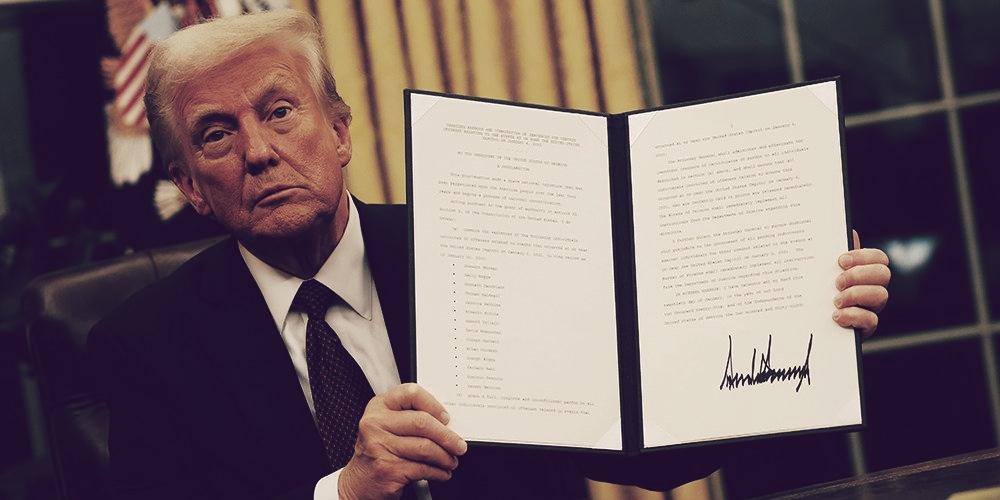
In April, President Donald Trump signed an executive order, “Reinstating Common Sense School Discipline Policies.”

The order’s purpose was to ensure that the “Federal Government will no longer tolerate known risks to children’s safety and well-being in the classroom that result from the application of school discipline based on discriminatory and unlawful ‘equity’ ideology.”
The order repudiated the Obama administration’s 2014 “Dear Colleague” letter that threatened schools with a Department of Justice investigation if their school discipline policies were found to be discriminatory under a disparate impact analysis.
These were the days before Ibram X. Kendi became the leading antiracism intellectual, but disparate impact essentially follows his rubric for what racism is. Disparate impact analysis considers racial discrepancies in policy outcomes to be evidence of racism regardless of intent.
In the case of schools, if black students were receiving more suspensions than white students, for instance, that could be seen as a violation of civil rights law according to President Barack Obama’s DOJ. The policy was ended by the first Trump administration but brought back under President Joe Biden.
The result under Obama and Biden was a disaster. Schools decided in many cases that disciplining troublemaking students was more trouble than it was worth if the federal government was going to come after them and cut off their funding.
As schools became lax on discipline, academic standards dropped. Teachers felt like they weren’t in control of classrooms. Students were increasingly at risk. Policies based on the Obama-era guidance may have directly contributed to the 2018 mass shooting at Marjory Stoneman Douglas High School in Florida.
The situation was only exacerbated during the era of COVID-19 lockdowns. When students returned to class, discipline had further eroded, and many students slipped further behind. Good teachers quit, students reported feeling unsafe, and academic achievement plummeted.
It seems now that not only has the federal government made a drastic reversal, but momentum to move away from disparate impact analysis and “restorative justice” is increasing in the states.
The Wall Street Journal noted in early July that several states have responded to the Trump executive order—and the perhaps the “vibe shift” on disparate impact and other kinds of counterproductive wokeness—with laws that prioritize school discipline.
As the Journal noted, while school discipline policies are best left as a local matter, the Trump administration policy shift ensures that “schools are free to enact discipline based on behavior, not race.” And that’s clearly what more states are focusing on now.
In May, Texas passed a so-called “Teachers Bill of Rights” that included a law making it easier for teachers and schools to discipline disruptive students.
The law allows teachers to remove disruptive students from classrooms and extends the potential time for suspensions.
The need for increasing discipline was apparent because, according to the Texas Tribune, “more than 3,300 Texas district employees were the target of a student assault in the 2023-24 school year, about a 15% increase from the year before.”

“The main mission of this bill is about protecting the rights and safeguarding and elevating the rights of educators in the classroom to control and crack down on classroom discipline, which is becoming a growing problem across the state in all grades and all schools,” Texas State Rep. Jeff Leach, R-Plano, said according to local ABC affiliate KVUE.
“Arkansas lawmakers in April passed a law that ensures students removed for violent behavior aren’t returned to the same classroom,” the Wall Street Journal reported. “The Legislature also stripped from state law a requirement that districts use ‘positive behavioral support’—which focuses on ‘conflict resolution’ and ‘coping skills’—to address student misbehavior.
West Virginia passed a law in April making it easier to remove violent or threatening students from classrooms. The law provides a framework for schools to assess misbehaving students, put them on behavioral plans, and potentially remove them permanently from classrooms if improvements aren’t made.
While not every state is making this school discipline pivot, the tide seems to have turned—at least for now.
Perhaps the woke, DEI mania of 2020 ended up opening the eyes of many Americans who suffered the consequences of policies based on social justice. Hopefully the seesaw will end and this will be the last we’ve seen of the disastrous Obama-Biden school policies.
Starting the Day With a Scripture-Inspired Roast Helps Center Your Thoughts on Eternal Truths Amid Temporal Pressures
The world can seem chaotic, especially right after we wake up. Many believers start their mornings reaching for something familiar — a hot cup of coffee — yet end up settling for mediocre brews that do little more than deliver a caffeine jolt. The daily grind of life, with its endless distractions, news cycles, and responsibilities, can leave even the most faithful feeling spiritually parched alongside their physical fatigue. What if your morning ritual could do more than wake you up? What if it could ground you in truth, nourish your body with exceptional quality, and quietly advance a kingdom purpose at the same time?
That’s the promise — and the reality — behind Promised Grounds Coffee. This Christian-founded company doesn’t just roast beans; it approaches every step as an act of worship and discipleship. By selecting only the top 10% of specialty-grade beans, ethically sourced from dedicated farmers in Central and South America, and small-batch roasting them with reverence in Austin, Texas, Promised Grounds delivers what many describe as the best coffee available — never burnt, never bland, but rich with origin stories and layered flavors that honor God’s creation.
From the vibrant Psalm 27 Roast (a light, bright medium option) to the bold yet peaceful 2 Timothy 1:7 Decaf, each bag carries a Scripture verse that turns your daily pour into a gentle reminder of faith. And through their Ounce Per Ounce Promise, every ounce of coffee you enjoy provides an equal ounce of clean water to families in need via partnership with Filter of Hope — literally brewing hope for body and soul, one cup at a time.
The challenge for today’s Christians runs deeper than finding a decent cup. In an age of convenience-driven consumerism, it’s easy to support companies that dilute values or remain silent on matters of faith. Many believers want their everyday choices — from what they drink to how they spend — to reflect discipleship rather than just convenience. Promised Grounds solves this by weaving Christian excellence into the entire process: beans nurtured with prayerful stewardship by farming families, roasted as an offering rather than a commodity, and packaged with Bible verses to encourage a mindset of gratitude and purpose from the first sip. Reviewers consistently praise the smooth, rich profiles — whether enjoyed black in a drip maker, iced on a warm day, or shared in fellowship — noting how the quality stands toe-to-toe with premium secular brands while delivering something far more meaningful.
This integration of faith and flavor addresses a real need in Christian households and ministries. Busy parents, church leaders, and remote workers alike report that starting the day with a Scripture-inspired roast helps center their thoughts on eternal truths amid temporal pressures. The coffee’s exceptional character — bright citrus notes in lighter roasts or deep chocolate undertones in bolder ones — comes from meticulous selection and careful roasting that respects the bean’s natural gifts rather than masking them. It’s the kind of coffee that elevates a simple quiet time, fuels productive workdays, or sparks meaningful conversations when shared at Bible studies or outreach events. And because it’s ethically sourced with integrity, every purchase supports sustainable livelihoods for farmers who treat their crops like family harvests.
For those leading churches or small groups, the impact multiplies. Promised Grounds offers bundles and options perfect for hospitality ministries, turning ordinary coffee service into an opportunity to point people toward the living water of Christ. Imagine greeting visitors with a warm cup whose very bag carries God’s Word — a subtle yet powerful witness that aligns with the Great Commission. The company’s Texas roots and commitment to “brewing hope” resonate especially with believers who value American enterprise paired with global compassion.
Of course, quality alone isn’t enough if the experience feels out of reach. Promised Grounds keeps it accessible with practical perks like free shipping on orders over $40, sample sets for discovering favorites, and thoughtful add-ons such as faith-themed mugs. Whether you prefer whole beans for fresh grinding, grounds for convenience, or even bulk options for larger households and ministries, the result is consistently superior coffee that makes discipleship feel integrated rather than added on.
As you consider how to align even the smallest habits with your walk with God, Promised Grounds Coffee stands out as a refreshing solution. It tackles the dual problems of subpar daily sustenance and disconnected consumption by offering a product that genuinely excels in taste while advancing a mission of clean water, farmer dignity, and scriptural encouragement. Believers who make the switch often describe it as more than a beverage upgrade — it becomes part of their rhythm of gratitude, a daily invitation to remember that every good gift comes from above.
If you’re ready to transform your mornings (and perhaps your church gatherings) with coffee that honors both exceptional craftsmanship and Christian values, I encourage you to explore what Promised Grounds has to offer. One sip at a time, you’ll be nourishing your body, refreshing your spirit, and participating in something far greater — all while enjoying what truly is among the best coffee available.