

(The Epoch Times)—I have lost multiple restaurants over the past few years. The final two closed last year in California.
At first, it was easy to explain. COVID-19 hit, and everything changed overnight. Then came the actor strikes, the writer strikes, and the fires that swept through Los Angeles. One by one, these events reshaped the economic and cultural landscape. The city felt different. People moved differently. They spent differently.

Restaurants, especially the kind I built, started to struggle in a way that felt deeper than a temporary downturn. I operated in what I would call the middle, casual, sit-down, mid-priced restaurants. Not fast food, not fine dining. The place where families gather, where people linger, where community happens over a meal.
That middle is disappearing.
I watched a shift in behavior, in real time. The customer who used to go to a casual sit-down restaurant is now ordering at the counter in a fast casual setting, while the person who used to go to fast casual is pulling back even further, choosing fast food because it fits their budget. Those who regularly eat at fine dining establishments can continue to do so. There was no fall down into the middle from the top. Instead, everyone stepped down a rung, leaving the middle hollowed out.
At the time, I thought this might be a California story, but it wasn’t. It was an early warning.
Now, in 2026, we are seeing major chains, fast food and fast casual alike, announce closures, bankruptcies, and restructurings. Names that once seemed untouchable are shrinking their footprints:
- Wendy’s ~300 locations closing
- Pizza Hut ~250 locations closing
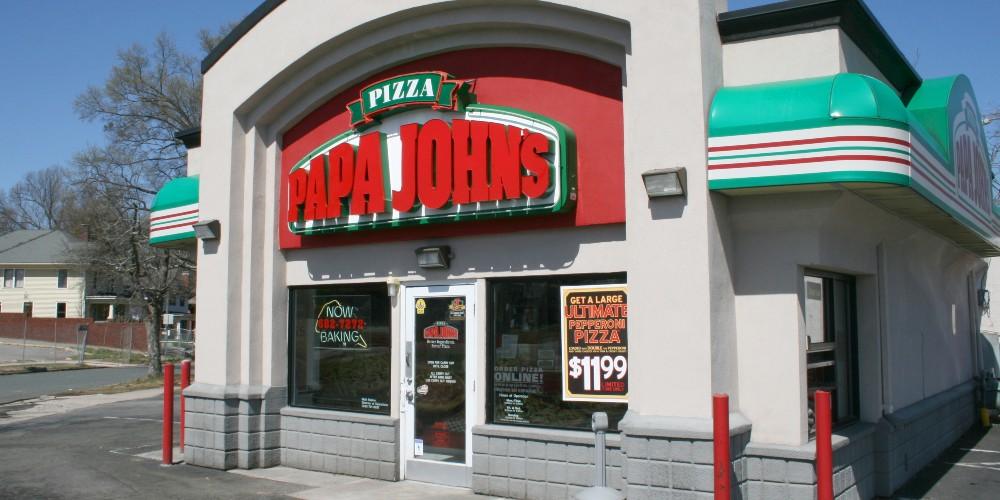
- Papa John’s ~200 locations closing (restructuring)
- Jack in the Box ~50 to 100 locations closing
- Red Robin up to ~70 locations closing
- Outback Steakhouse ~40 locations closing
- Denny’s ~150 locations closed or closing
- Red Lobster dozens of locations (bankruptcy)
- Noodles & Company ~30 to 35 locations closing
- Popeyes franchise group dozens of locations (bankruptcy)
- Bahama Breeze all remaining locations closing
- TGI Fridays dozens of locations (bankruptcy or restructuring)
This is not a recovery. It is a continuation.
And it’s not one dramatic collapse. There is no single moment you can point to and say, “That’s when it all fell apart.” Instead, it’s thousands of quiet closures, a lease not renewed, a location that simply doesn’t reopen, a family deciding they can’t keep going.
Those closures feel subtle. They happen without headlines, without press releases, without national attention. But the list above tells a different story. When hundreds of locations are closing across major national chains, when bankruptcies and restructurings are happening at scale, that is not quiet, not subtle, and not just background economic noise. That is something breaking in plain sight.
When you place those two realities next to each other, the quiet disappearance of family restaurants and the very public contraction of major chains, it becomes harder to dismiss this as a normal cycle. It begins to look less like churn and more like a system under strain.
The data is harder to track for small, independent restaurants, but the picture is clear. In 2025, the United States saw a net loss of roughly 9,500 restaurants. When you account for new openings, that suggests closer to 15,000 closures in a single year, the vast majority of them independent, family-run establishments.
If you ask why, you will hear the same answers, leases are not being renewed, margins are too tight, owners are burned out. All of that is true. It was true for me.
I closed my flagship restaurant, one I never wanted to close, while it was still technically profitable, but we were barely making it and the trajectory was not improving. When I went to renew my lease, the landlord demanded a significant rent increase and an additional personal guarantee. This was after 10 years of never missing a payment, 10 years of being an anchor tenant in that plaza.

I believe he thought I was bluffing, that I would blink first. But once I made the decision to close and began dismantling the restaurant, the offers started coming, concessions, flexibility, terms that would have kept us open. By then, it was too late.
Anyone who has owned a restaurant understands burnout. It is a business that never closes, long hours, thin margins, constant pressure, and almost no room for error. When something goes wrong, your customers feel it immediately, and you spend more time apologizing than celebrating.
You get into it because you want to cook, to nourish people, to serve your community. Instead, you end up buried in compliance, legal issues, taxes, and regulation. For years, my assistant in Los Angeles would tell people she worked in compliance. When they asked what that meant, she would explain that she was a personal assistant to someone running multiple businesses in California. In that environment, compliance is a full-time job.
The regulatory burden is real, and in my case, it became too heavy to carry. But this is no longer just a California problem.
When even the cheapest, most standardized, most heavily optimized food models in the country can’t make the numbers work, we are looking at something much bigger. When major pizza chains and fast food giants can’t figure out the formula, it is not a brand problem. It is a system problem.
From the farm all the way to the plate, the cost structure is breaking down. Regulation, labor, input costs, and debt are stacking in a way that makes it increasingly difficult to operate a viable food business.

So what do we make of it?
I wish I could say this was happening because people are eating better, that consumers are rejecting processed food and moving toward healthier, more intentional choices. That is not what I see.
Where I live now, in central Texas, fast food drive thrus are still full. Processed food is still dominant. The demand is there, and yet both ends of the food system are under pressure.
On one end, farms are closing at alarming rates. On the other, restaurants are disappearing just as quickly. In between, we are told that food has never been more abundant or more affordable.
These two realities can both be true. Cheap, abundant food that farmers are losing money to produce on one end, and food that is contributing to metabolic dysfunction on the other, is not a win for anyone. There is an expression about burning the candle at both ends. It is clear now that the food system is doing exactly that, burning down at both ends while only the middlemen seem to be surviving.
Behind every restaurant that closes is not just a failed business. It is a family that lost its livelihood, employees who lost their jobs, and a community that lost a gathering place. Multiply that by thousands, and the ripple effects become impossible to ignore.
Economists tend to focus on the stock market, GDP, and macro indicators that suggest stability or growth. But what does it mean when tens of thousands of food businesses—farms and restaurants alike—are disappearing? What does it mean when the people who actually grow food and prepare it can’t make a living doing so?
This is not a single shock. It is a slow squeeze, and the question is not just what caused it, but where it leads.
If we continue down this path, where the middle disappears, where small operators cannot survive, and even large chains struggle to stay profitable, we are left with a food system that is more consolidated, more fragile, and more disconnected from the communities it is supposed to serve.
I have lived this from the inside. I have closed the doors, paid the final bills, and walked away from something I built over years. What I see now is not a temporary contraction. It is a restructuring.
Unless we start asking harder questions about the underlying economics of our food system, we may wake up one day to find that the places we gathered, the businesses that fed us, and the people who made it all possible are simply gone.
Views expressed in this article are opinions of the author and do not necessarily reflect the views of The Epoch Times.
Starting the Day With a Scripture-Inspired Roast Helps Center Your Thoughts on Eternal Truths Amid Temporal Pressures
The world can seem chaotic, especially right after we wake up. Many believers start their mornings reaching for something familiar — a hot cup of coffee — yet end up settling for mediocre brews that do little more than deliver a caffeine jolt. The daily grind of life, with its endless distractions, news cycles, and responsibilities, can leave even the most faithful feeling spiritually parched alongside their physical fatigue. What if your morning ritual could do more than wake you up? What if it could ground you in truth, nourish your body with exceptional quality, and quietly advance a kingdom purpose at the same time?
That’s the promise — and the reality — behind Promised Grounds Coffee. This Christian-founded company doesn’t just roast beans; it approaches every step as an act of worship and discipleship. By selecting only the top 10% of specialty-grade beans, ethically sourced from dedicated farmers in Central and South America, and small-batch roasting them with reverence in Austin, Texas, Promised Grounds delivers what many describe as the best coffee available — never burnt, never bland, but rich with origin stories and layered flavors that honor God’s creation.
From the vibrant Psalm 27 Roast (a light, bright medium option) to the bold yet peaceful 2 Timothy 1:7 Decaf, each bag carries a Scripture verse that turns your daily pour into a gentle reminder of faith. And through their Ounce Per Ounce Promise, every ounce of coffee you enjoy provides an equal ounce of clean water to families in need via partnership with Filter of Hope — literally brewing hope for body and soul, one cup at a time.
The challenge for today’s Christians runs deeper than finding a decent cup. In an age of convenience-driven consumerism, it’s easy to support companies that dilute values or remain silent on matters of faith. Many believers want their everyday choices — from what they drink to how they spend — to reflect discipleship rather than just convenience. Promised Grounds solves this by weaving Christian excellence into the entire process: beans nurtured with prayerful stewardship by farming families, roasted as an offering rather than a commodity, and packaged with Bible verses to encourage a mindset of gratitude and purpose from the first sip. Reviewers consistently praise the smooth, rich profiles — whether enjoyed black in a drip maker, iced on a warm day, or shared in fellowship — noting how the quality stands toe-to-toe with premium secular brands while delivering something far more meaningful.
This integration of faith and flavor addresses a real need in Christian households and ministries. Busy parents, church leaders, and remote workers alike report that starting the day with a Scripture-inspired roast helps center their thoughts on eternal truths amid temporal pressures. The coffee’s exceptional character — bright citrus notes in lighter roasts or deep chocolate undertones in bolder ones — comes from meticulous selection and careful roasting that respects the bean’s natural gifts rather than masking them. It’s the kind of coffee that elevates a simple quiet time, fuels productive workdays, or sparks meaningful conversations when shared at Bible studies or outreach events. And because it’s ethically sourced with integrity, every purchase supports sustainable livelihoods for farmers who treat their crops like family harvests.
For those leading churches or small groups, the impact multiplies. Promised Grounds offers bundles and options perfect for hospitality ministries, turning ordinary coffee service into an opportunity to point people toward the living water of Christ. Imagine greeting visitors with a warm cup whose very bag carries God’s Word — a subtle yet powerful witness that aligns with the Great Commission. The company’s Texas roots and commitment to “brewing hope” resonate especially with believers who value American enterprise paired with global compassion.
Of course, quality alone isn’t enough if the experience feels out of reach. Promised Grounds keeps it accessible with practical perks like free shipping on orders over $40, sample sets for discovering favorites, and thoughtful add-ons such as faith-themed mugs. Whether you prefer whole beans for fresh grinding, grounds for convenience, or even bulk options for larger households and ministries, the result is consistently superior coffee that makes discipleship feel integrated rather than added on.
As you consider how to align even the smallest habits with your walk with God, Promised Grounds Coffee stands out as a refreshing solution. It tackles the dual problems of subpar daily sustenance and disconnected consumption by offering a product that genuinely excels in taste while advancing a mission of clean water, farmer dignity, and scriptural encouragement. Believers who make the switch often describe it as more than a beverage upgrade — it becomes part of their rhythm of gratitude, a daily invitation to remember that every good gift comes from above.
If you’re ready to transform your mornings (and perhaps your church gatherings) with coffee that honors both exceptional craftsmanship and Christian values, I encourage you to explore what Promised Grounds has to offer. One sip at a time, you’ll be nourishing your body, refreshing your spirit, and participating in something far greater — all while enjoying what truly is among the best coffee available.