
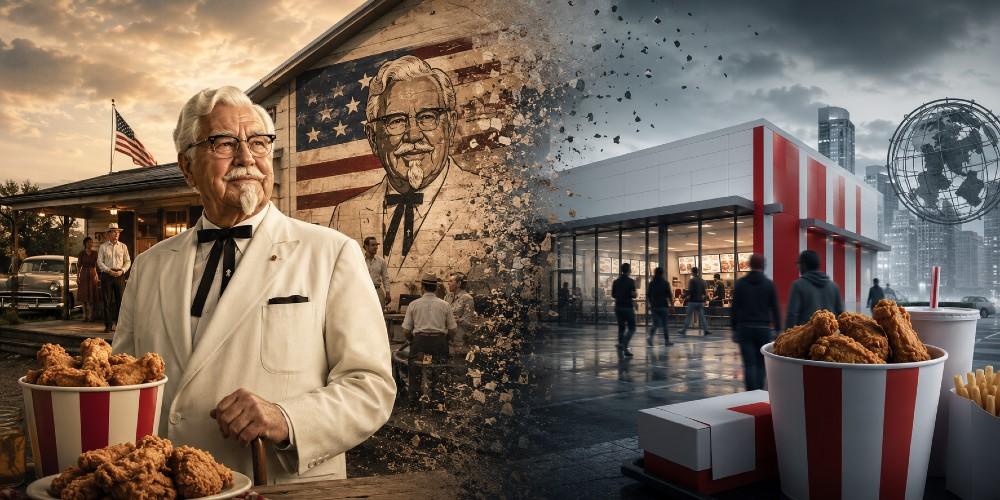
In 1991, Kentucky Fried Chicken officially became KFC, a seemingly minor tweak that has sparked decades of speculation. Far from a simple marketing update, this rebranding marked a subtle but significant erosion of American tradition in the name of corporate modernity.
What began as a roadside cafe rooted in Southern ingenuity and Colonel Harland Sanders’ secret recipe morphed into an acronym that conveniently sidestepped its own identity.

The company has long dismissed rumors of mutant chickens or state trademark extortion as urban legends. Yet the timing and stated rationale reveal deeper truths about how businesses navigate cultural headwinds. As one executive noted at the time, “Fried is not a contemporary image.”
In an era obsessed with health fads and polished facades, dropping the full name allowed KFC to project a fresher, broader appeal while downplaying the very thing that built its empire.
Colonel Sanders himself embodied the American dream—a self-taught cook who turned a gas station kitchen into a global franchise through grit, innovation, and unapologetic flavor. His pressure-cooked chicken, perfected in Corbin, Kentucky, represented regional pride and honest commerce.
By the early ’90s, however, the chain faced stagnating sales on bone-in fried chicken. Introducing lighter options like skinless varieties coincided neatly with the name purge, signaling a pivot away from its roots.
Branding experts point to practical benefits: shorter signs, easier global recognition, and alignment with peers like Coca-Cola embracing “Coke.” Yet this functional explanation misses the cultural cost. In shedding “Kentucky” and “Fried,” the company distanced itself from place and process—hallmarks of authenticity in a world increasingly favoring generic convenience.
“Kentucky Fried Chicken” took space on billboards and evoked a specific heritage; “KFC” slips into the urban noise, recognizable but rootless.
Persistent myths, including claims of Kentucky trademarking its name for fees, underscore public skepticism toward corporate motives. While debunked, such stories thrive because they tap into a valid frustration: institutions often prioritize image over substance.
KFC’s global footprint now spans 150 countries with over 30,000 locations, proving the formula’s enduring power. But growth came at the price of diluting the founder’s legacy, which once centered on quality and character rather than fleeting trends.
Recent updates, including refreshed buckets and a subtle Colonel evolution, continue this pattern. The brand remains a fast-food staple, yet one wonders what Sanders—known for his outspoken criticism of later corporate shortcuts—would make of today’s iteration. His vision prized excellence over expediency.
As Americans confront the steady erosion of local identities and honest traditions in favor of homogenized globalism, KFC’s story serves as a microcosm. Enterprises chase relevance by obscuring what made them distinctive, much like broader cultural forces that redefine or sanitize heritage to fit contemporary sensibilities.
“And be not conformed to this world: but be ye transformed by the renewing of your mind, that ye may prove what is that good, and acceptable, and perfect, will of God.” (Romans 12:2)
In an age where even chicken joints rewrite their story to appease shifting tastes, holding fast to enduring principles—faith, family, and flavorful tradition—remains the wiser path. KFC’s rebrand succeeded on balance sheets, but at what cost to the soul of its Southern beginnings?
Starting the Day With a Scripture-Inspired Roast Helps Center Your Thoughts on Eternal Truths Amid Temporal Pressures
The world can seem chaotic, especially right after we wake up. Many believers start their mornings reaching for something familiar — a hot cup of coffee — yet end up settling for mediocre brews that do little more than deliver a caffeine jolt. The daily grind of life, with its endless distractions, news cycles, and responsibilities, can leave even the most faithful feeling spiritually parched alongside their physical fatigue. What if your morning ritual could do more than wake you up? What if it could ground you in truth, nourish your body with exceptional quality, and quietly advance a kingdom purpose at the same time?
That’s the promise — and the reality — behind Promised Grounds Coffee. This Christian-founded company doesn’t just roast beans; it approaches every step as an act of worship and discipleship. By selecting only the top 10% of specialty-grade beans, ethically sourced from dedicated farmers in Central and South America, and small-batch roasting them with reverence in Austin, Texas, Promised Grounds delivers what many describe as the best coffee available — never burnt, never bland, but rich with origin stories and layered flavors that honor God’s creation.
From the vibrant Psalm 27 Roast (a light, bright medium option) to the bold yet peaceful 2 Timothy 1:7 Decaf, each bag carries a Scripture verse that turns your daily pour into a gentle reminder of faith. And through their Ounce Per Ounce Promise, every ounce of coffee you enjoy provides an equal ounce of clean water to families in need via partnership with Filter of Hope — literally brewing hope for body and soul, one cup at a time.
The challenge for today’s Christians runs deeper than finding a decent cup. In an age of convenience-driven consumerism, it’s easy to support companies that dilute values or remain silent on matters of faith. Many believers want their everyday choices — from what they drink to how they spend — to reflect discipleship rather than just convenience. Promised Grounds solves this by weaving Christian excellence into the entire process: beans nurtured with prayerful stewardship by farming families, roasted as an offering rather than a commodity, and packaged with Bible verses to encourage a mindset of gratitude and purpose from the first sip. Reviewers consistently praise the smooth, rich profiles — whether enjoyed black in a drip maker, iced on a warm day, or shared in fellowship — noting how the quality stands toe-to-toe with premium secular brands while delivering something far more meaningful.
This integration of faith and flavor addresses a real need in Christian households and ministries. Busy parents, church leaders, and remote workers alike report that starting the day with a Scripture-inspired roast helps center their thoughts on eternal truths amid temporal pressures. The coffee’s exceptional character — bright citrus notes in lighter roasts or deep chocolate undertones in bolder ones — comes from meticulous selection and careful roasting that respects the bean’s natural gifts rather than masking them. It’s the kind of coffee that elevates a simple quiet time, fuels productive workdays, or sparks meaningful conversations when shared at Bible studies or outreach events. And because it’s ethically sourced with integrity, every purchase supports sustainable livelihoods for farmers who treat their crops like family harvests.
For those leading churches or small groups, the impact multiplies. Promised Grounds offers bundles and options perfect for hospitality ministries, turning ordinary coffee service into an opportunity to point people toward the living water of Christ. Imagine greeting visitors with a warm cup whose very bag carries God’s Word — a subtle yet powerful witness that aligns with the Great Commission. The company’s Texas roots and commitment to “brewing hope” resonate especially with believers who value American enterprise paired with global compassion.
Of course, quality alone isn’t enough if the experience feels out of reach. Promised Grounds keeps it accessible with practical perks like free shipping on orders over $40, sample sets for discovering favorites, and thoughtful add-ons such as faith-themed mugs. Whether you prefer whole beans for fresh grinding, grounds for convenience, or even bulk options for larger households and ministries, the result is consistently superior coffee that makes discipleship feel integrated rather than added on.
As you consider how to align even the smallest habits with your walk with God, Promised Grounds Coffee stands out as a refreshing solution. It tackles the dual problems of subpar daily sustenance and disconnected consumption by offering a product that genuinely excels in taste while advancing a mission of clean water, farmer dignity, and scriptural encouragement. Believers who make the switch often describe it as more than a beverage upgrade — it becomes part of their rhythm of gratitude, a daily invitation to remember that every good gift comes from above.
If you’re ready to transform your mornings (and perhaps your church gatherings) with coffee that honors both exceptional craftsmanship and Christian values, I encourage you to explore what Promised Grounds has to offer. One sip at a time, you’ll be nourishing your body, refreshing your spirit, and participating in something far greater — all while enjoying what truly is among the best coffee available.