(Natural News)—Imagine a world where the richest nations—those preaching democracy, human rights, and economic justice—quietly funnel billions of dollars into the pockets of dictators, warlords, and corrupt elites, all while patting themselves on the back for their “generosity.” Now imagine those same nations, drowning in debt and economic mismanagement, suddenly pulling the plug on their so-called “aid,” leaving a power vacuum so vast that a far more ruthless player steps in—not to help, but to dominate.
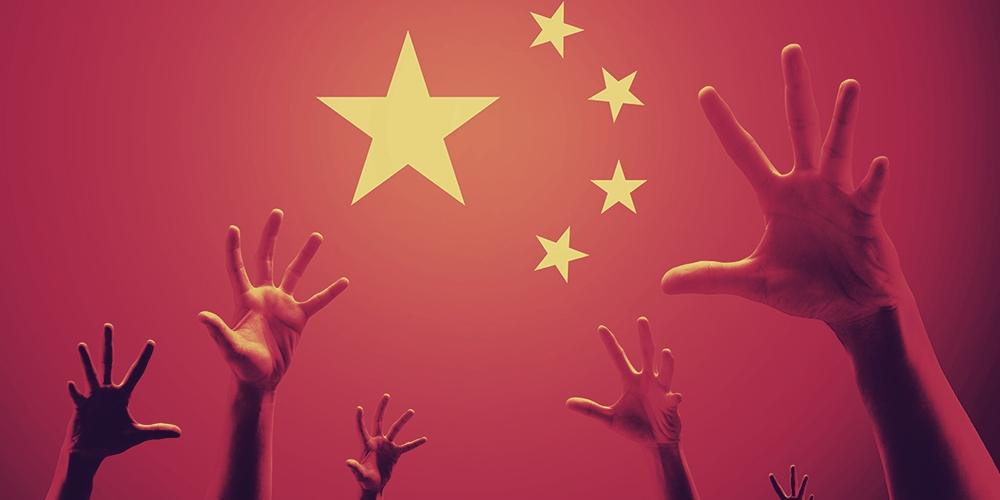
This is happening right now. Western foreign aid, a decades-long charade of goodwill masking exploitation and failure, is collapsing under its own weight. And as the U.S. and Europe retreat, China is seizing the moment—not to lift nations out of poverty, but to bind them in debt, control their governments, and reshape global power in its own image.

The truth is brutal: Western aid was never about saving the poor. It was about propping up compliant regimes, enriching elites, and maintaining the illusion of moral superiority while corporations and banks looted developing nations. Now, as Western economies crumble under stagflation, unsustainable debt, and political instability, the aid spigot is being turned off. But don’t mistake this for a victory for fiscal responsibility. The real tragedy is what comes next—because China isn’t offering charity. It’s offering a new form of colonialism, one where “cooperation” means surrender, and “development” means dependency.
Key points:
- Western foreign aid was a corrupt, failed experiment—billions wasted on propping up dictators, funding useless projects, and enriching elites while ordinary citizens suffered.
- The U.S. and Europe are slashing aid budgets as their own economies falter, leaving a power vacuum in global development.
- China is rushing in—but its “aid” is a trojan horse, designed to trap nations in debt, control their infrastructure, and bend their policies to Beijing’s will.
- Myanmar is the canary in the coal mine: China is orchestrating a sham election to legitimize a brutal junta, proving its “cooperation” model is about control, not democracy.
- The Gulf States and other new donors are following China’s playbook, using aid as a tool for geopolitical leverage rather than human development.
- The end of Western aid could be an opportunity—but only if nations reject predatory alternatives and demand real sovereignty, not new chains.
- Gold, silver, and decentralized resilience are the antidotes to the coming financial and geopolitical storms.
The grand illusion: How Western aid enriched tyrants and impoverished the poor
For decades, Western governments and their lapdog institutions—the World Bank, the IMF, the UN—have sold a fairy tale: If only we send enough money, we can lift the world out of poverty. The reality? Aid was never about the poor. It was about control, corruption, and corporate profit, wrapped in the pretty packaging of altruism.
Take Haiti, a nation that has been bled dry by foreign aid. Between the 1970s and 1980s, Western taxpayers funded two-thirds of Haiti’s government budget—yet most of that money never reached the people. Instead, it lined the pockets of the Duvalier dynasty, a father-son team of kleptocrats who ruled through terror. The U.S. knew about the corruption. The State Department admitted that 63% of Haiti’s government revenue was stolen annually, with millions funneled into “Baby Doc” Duvalier’s Swiss bank accounts. Yet the aid kept flowing. Why? Because aid wasn’t about helping Haitians—it was about keeping a compliant regime in power.
And Haiti wasn’t an exception. Across Africa, Latin America, and Asia, the story was the same: Aid money disappeared into offshore accounts, funded lavish lifestyles for elites, and bankrolled repression. In Mexico, $56 billion fled the country in a decade—enough to pay off its entire foreign debt. In the Philippines, aid propped up Ferdin and Marcos while he looted $10 billion from his own people. In Zaire (now the DRC), Mobutu Sese Seko became one of the richest men in the world while his country starved.
The system was designed to fail the poor. Projects were overpriced, mismanaged, or outright fraudulent. Resettlement schemes in Brazil and Indonesia cost $12,000 per settler—only to displace indigenous people and leave migrants worse off. Food aid allowed governments to starve their own citizens while selling donated grain on the black market. Structural adjustment loans—supposed to “stabilize” economies—gutted social programs, privatized public assets, and trapped nations in debt.
The more aid flowed, the worse things got. Nations that received the most aid saw slower growth, more corruption, and deeper poverty. Meanwhile, countries like South Korea and Taiwan, which rejected heavy aid dependence, became economic powerhouses. The evidence was clear: Aid didn’t work. It was the problem.
Yet the aid industrial complex—NGOs, bureaucrats, politicians, and corporations—kept the gravy train rolling. Why? Because aid was never about results. It was about power. And now, as Western economies collapse under their own debt, the aid tap is being turned off.
The Western retreat: Economic collapse forces the end of the aid gravy train
The death knell for Western aid is sounding—and it’s not because politicians suddenly grew a conscience. It’s because the money is gone.
In the U.S., Donald Trump slashed foreign aid budgets upon taking office, recognizing what many had long suspected: Aid was a wasteful, corrupt boondoggle. But the real crisis is deeper. America is broke. The national debt is $35 trillion and climbing, inflation is eroding wages, and the dollar’s dominance is under siege. The same is true across Europe. The UK, once a major aid donor, is now facing a debt crisis so severe that long-term borrowing costs have hit 25-year highs. Chancellor Rachel Reeves is scrambling to raise £27 billion just to plug the budget deficit—meaning there’s no money left for foreign handouts.
The numbers don’t lie:
- Global ODA peaked at 223billionin2023—thendroppedto223billionin2023—thendroppedto207 billion in 2024.
- Further cuts are expected this year, as Western nations prioritize defense spending and domestic crises over foreign charity.
- The UK now spends 34% of its aid budget on multilateral organizations like the UN and World Bank—institutions notorious for waste, fraud, and failure.
The writing is on the wall: The era of Western aid is over. But here’s the catch—the void it leaves won’t stay empty for long.

China’s predatory “cooperation”: How Beijing is turning aid into a weapon of control
As the West retreats, China is moving in—but not as a benevolent replacement. Beijing’s model of “aid” is a wolf in sheep’s clothing, a debt trap disguised as development.
Unlike Western aid, which at least pretended to care about democracy and human rights, China’s approach is transactional, ruthless, and designed for domination. Here’s how it works:
- No strings attached (except the ones you can’t see).
- Western aid often came with conditions—at least on paper—like “anti-corruption reforms” or “human rights improvements.” (Of course, those were routinely ignored when convenient.)
- China doesn’t bother with the pretense. Its loans and investments come with one condition: loyalty to Beijing.
- Need a port? A highway? A power plant? China will build it—but it will own it. And if you can’t pay? Hand over control.
Debt as a weapon
- China’s Belt and Road Initiative has already ensnared nations from Sri Lanka to Zambia in unsustainable debt.
- When countries default, China seizes assets. Sri Lanka lost its Hambantota Port for 99 years. Zambia may lose its national electricity company.
- This isn’t aid. It’s colonialism 2.0.
Elections as theater: The Myanmar blueprint.
- Nowhere is China’s real agenda clearer than in Myanmar, where Beijing is orchestrating a sham election to legitimize a brutal military junta.
- After the 2021 coup, Myanmar’s generals massacred protesters, jailed democratically elected leaders, and plunged the country into civil war.
- Now, China is pushing for an election—but with Aung San Suu Kyi’s party banned, and rebel groups excluded. The goal? A controlled transition that keeps the junta in power—and China in control.
- As Chinese Foreign Minister Wang Yi put it, the election should focus on “stability, reconciliation, and economic recovery”—code for “do what we say, or else.”
The Gulf States and others are following China’s lead.
- Saudi Arabia, the UAE, and Qatar are increasing their own “aid” spending—but like China, they’re using it for geopolitical leverage.
- No more “localization” or “civil society” nonsense. These new donors work directly with governments, ignore human rights, and demand returns on their investments.
- The message is clear: The age of Western hypocrisy is ending. But the age of Chinese domination is just beginning—and it will be far worse.
Sources include:

Starting the Day With a Scripture-Inspired Roast Helps Center Your Thoughts on Eternal Truths Amid Temporal Pressures
The world can seem chaotic, especially right after we wake up. Many believers start their mornings reaching for something familiar — a hot cup of coffee — yet end up settling for mediocre brews that do little more than deliver a caffeine jolt. The daily grind of life, with its endless distractions, news cycles, and responsibilities, can leave even the most faithful feeling spiritually parched alongside their physical fatigue. What if your morning ritual could do more than wake you up? What if it could ground you in truth, nourish your body with exceptional quality, and quietly advance a kingdom purpose at the same time?
That’s the promise — and the reality — behind Promised Grounds Coffee. This Christian-founded company doesn’t just roast beans; it approaches every step as an act of worship and discipleship. By selecting only the top 10% of specialty-grade beans, ethically sourced from dedicated farmers in Central and South America, and small-batch roasting them with reverence in Austin, Texas, Promised Grounds delivers what many describe as the best coffee available — never burnt, never bland, but rich with origin stories and layered flavors that honor God’s creation.
From the vibrant Psalm 27 Roast (a light, bright medium option) to the bold yet peaceful 2 Timothy 1:7 Decaf, each bag carries a Scripture verse that turns your daily pour into a gentle reminder of faith. And through their Ounce Per Ounce Promise, every ounce of coffee you enjoy provides an equal ounce of clean water to families in need via partnership with Filter of Hope — literally brewing hope for body and soul, one cup at a time.
The challenge for today’s Christians runs deeper than finding a decent cup. In an age of convenience-driven consumerism, it’s easy to support companies that dilute values or remain silent on matters of faith. Many believers want their everyday choices — from what they drink to how they spend — to reflect discipleship rather than just convenience. Promised Grounds solves this by weaving Christian excellence into the entire process: beans nurtured with prayerful stewardship by farming families, roasted as an offering rather than a commodity, and packaged with Bible verses to encourage a mindset of gratitude and purpose from the first sip. Reviewers consistently praise the smooth, rich profiles — whether enjoyed black in a drip maker, iced on a warm day, or shared in fellowship — noting how the quality stands toe-to-toe with premium secular brands while delivering something far more meaningful.
This integration of faith and flavor addresses a real need in Christian households and ministries. Busy parents, church leaders, and remote workers alike report that starting the day with a Scripture-inspired roast helps center their thoughts on eternal truths amid temporal pressures. The coffee’s exceptional character — bright citrus notes in lighter roasts or deep chocolate undertones in bolder ones — comes from meticulous selection and careful roasting that respects the bean’s natural gifts rather than masking them. It’s the kind of coffee that elevates a simple quiet time, fuels productive workdays, or sparks meaningful conversations when shared at Bible studies or outreach events. And because it’s ethically sourced with integrity, every purchase supports sustainable livelihoods for farmers who treat their crops like family harvests.
For those leading churches or small groups, the impact multiplies. Promised Grounds offers bundles and options perfect for hospitality ministries, turning ordinary coffee service into an opportunity to point people toward the living water of Christ. Imagine greeting visitors with a warm cup whose very bag carries God’s Word — a subtle yet powerful witness that aligns with the Great Commission. The company’s Texas roots and commitment to “brewing hope” resonate especially with believers who value American enterprise paired with global compassion.
Of course, quality alone isn’t enough if the experience feels out of reach. Promised Grounds keeps it accessible with practical perks like free shipping on orders over $40, sample sets for discovering favorites, and thoughtful add-ons such as faith-themed mugs. Whether you prefer whole beans for fresh grinding, grounds for convenience, or even bulk options for larger households and ministries, the result is consistently superior coffee that makes discipleship feel integrated rather than added on.
As you consider how to align even the smallest habits with your walk with God, Promised Grounds Coffee stands out as a refreshing solution. It tackles the dual problems of subpar daily sustenance and disconnected consumption by offering a product that genuinely excels in taste while advancing a mission of clean water, farmer dignity, and scriptural encouragement. Believers who make the switch often describe it as more than a beverage upgrade — it becomes part of their rhythm of gratitude, a daily invitation to remember that every good gift comes from above.
If you’re ready to transform your mornings (and perhaps your church gatherings) with coffee that honors both exceptional craftsmanship and Christian values, I encourage you to explore what Promised Grounds has to offer. One sip at a time, you’ll be nourishing your body, refreshing your spirit, and participating in something far greater — all while enjoying what truly is among the best coffee available.