
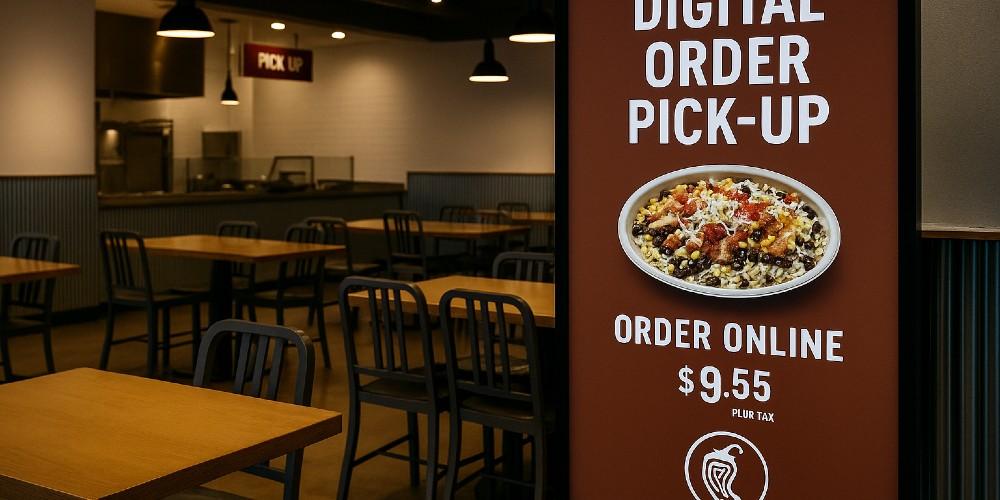
Chipotle Mexican Grill’s latest earnings reveal a harsh lesson in overestimating cultural trends and underestimating economic reality. Once the darling of Wall Street and millennial “food with integrity” branding, the burrito giant bet heavily on younger consumers—only to find that those same diners are cutting back, cooking at home, and ditching restaurant tabs in favor of digital convenience and debt repayment.
The company’s third-quarter results for 2025 showed slowing same-store sales growth, pressured margins, and an increasingly cautious consumer base. Chipotle’s stock initially dipped 13% despite the chain’s aggressive efforts to reinvent itself as a digital-first brand with heavy social media marketing and “values-driven” initiatives aimed at Gen Z. Executives pointed to inflation, student loan burdens, and high housing costs as reasons why their younger customers are eating out less frequently.

What they didn’t say out loud is that Chipotle’s woke rebranding—a steady stream of ESG messaging, gender-driven marketing, and activist partnerships—hasn’t exactly earned them loyalty among the demographics with real purchasing power.
When you market your business to a generation struggling to pay rent and politically alienate the rest, you get precisely what Chipotle is seeing now: a shrinking middle-class customer base and a younger audience that’s simply not spending.
According to Chipotle’s own filings, traffic was flat in Q3 while digital sales accounted for roughly 37% of revenue, a figure boosted by smaller, cheaper online orders. Average check sizes have dropped for the first time since 2020, an early sign that inflation-fatigued customers are trading down or staying home. Even as food costs stabilize, wage inflation and delivery partnerships continue to weigh on profitability.
It’s an ironic twist for a brand once viewed as an inflation hedge in the restaurant sector. When the Federal Reserve’s money-printing fueled consumer demand in 2020–2022, Chipotle rode that wave to record profits. But the hangover from that same easy-money era is now hitting its core audience: young workers with credit card debt at record highs and savings at record lows. The same generation that embraced Chipotle’s digital rewards and “sustainably sourced” burritos is now cancelling app orders to pay utility bills.
Chipotle isn’t the only chain facing this squeeze, but its position is unique because it spent the last several years aligning itself with the cultural messaging of elites instead of the economic realities of everyday Americans. Its public statements on “climate responsibility” and “equity in agriculture” play well with investors in ESG funds, but they don’t drive foot traffic from families or middle-income workers who just want affordable food.
In a tightening economy, social virtue doesn’t sell lunch.
For investors, the story is less about one restaurant’s marketing strategy and more about what it signals across the broader economy. The post-pandemic spending binge is over. Credit-fueled consumption is breaking down under the weight of rising debt and shrinking confidence. Younger consumers—the ones once hailed as the drivers of the “new economy”—are pulling back sharply. Chipotle’s overexposure to that demographic makes it a cautionary tale of corporate groupthink.
There’s a growing divide in the marketplace between companies that focus on fundamentals—quality, value, and long-term brand trust—and those that chase political virtue or cultural fads. Chipotle’s decline in foot traffic may be temporary, but its alienation of the broader working-class consumer might not be. The irony is that retirees and older Americans, who still dine out regularly and control the majority of U.S. disposable income, were largely ignored by the company’s marketing overhaul.
They’re the ones still sitting down for lunch, not livestreaming their burritos.
For those watching the broader financial landscape, Chipotle’s stumble is another symptom of a deeper economic trend: the collapse of illusionary prosperity built on cheap credit and corporate virtue-signaling. In a real economy—one built on production, savings, and sound money—companies succeed by serving customers, not narratives. And that’s something no marketing campaign can fix.
Starting the Day With a Scripture-Inspired Roast Helps Center Your Thoughts on Eternal Truths Amid Temporal Pressures
The world can seem chaotic, especially right after we wake up. Many believers start their mornings reaching for something familiar — a hot cup of coffee — yet end up settling for mediocre brews that do little more than deliver a caffeine jolt. The daily grind of life, with its endless distractions, news cycles, and responsibilities, can leave even the most faithful feeling spiritually parched alongside their physical fatigue. What if your morning ritual could do more than wake you up? What if it could ground you in truth, nourish your body with exceptional quality, and quietly advance a kingdom purpose at the same time?
That’s the promise — and the reality — behind Promised Grounds Coffee. This Christian-founded company doesn’t just roast beans; it approaches every step as an act of worship and discipleship. By selecting only the top 10% of specialty-grade beans, ethically sourced from dedicated farmers in Central and South America, and small-batch roasting them with reverence in Austin, Texas, Promised Grounds delivers what many describe as the best coffee available — never burnt, never bland, but rich with origin stories and layered flavors that honor God’s creation.
From the vibrant Psalm 27 Roast (a light, bright medium option) to the bold yet peaceful 2 Timothy 1:7 Decaf, each bag carries a Scripture verse that turns your daily pour into a gentle reminder of faith. And through their Ounce Per Ounce Promise, every ounce of coffee you enjoy provides an equal ounce of clean water to families in need via partnership with Filter of Hope — literally brewing hope for body and soul, one cup at a time.
The challenge for today’s Christians runs deeper than finding a decent cup. In an age of convenience-driven consumerism, it’s easy to support companies that dilute values or remain silent on matters of faith. Many believers want their everyday choices — from what they drink to how they spend — to reflect discipleship rather than just convenience. Promised Grounds solves this by weaving Christian excellence into the entire process: beans nurtured with prayerful stewardship by farming families, roasted as an offering rather than a commodity, and packaged with Bible verses to encourage a mindset of gratitude and purpose from the first sip. Reviewers consistently praise the smooth, rich profiles — whether enjoyed black in a drip maker, iced on a warm day, or shared in fellowship — noting how the quality stands toe-to-toe with premium secular brands while delivering something far more meaningful.
This integration of faith and flavor addresses a real need in Christian households and ministries. Busy parents, church leaders, and remote workers alike report that starting the day with a Scripture-inspired roast helps center their thoughts on eternal truths amid temporal pressures. The coffee’s exceptional character — bright citrus notes in lighter roasts or deep chocolate undertones in bolder ones — comes from meticulous selection and careful roasting that respects the bean’s natural gifts rather than masking them. It’s the kind of coffee that elevates a simple quiet time, fuels productive workdays, or sparks meaningful conversations when shared at Bible studies or outreach events. And because it’s ethically sourced with integrity, every purchase supports sustainable livelihoods for farmers who treat their crops like family harvests.
For those leading churches or small groups, the impact multiplies. Promised Grounds offers bundles and options perfect for hospitality ministries, turning ordinary coffee service into an opportunity to point people toward the living water of Christ. Imagine greeting visitors with a warm cup whose very bag carries God’s Word — a subtle yet powerful witness that aligns with the Great Commission. The company’s Texas roots and commitment to “brewing hope” resonate especially with believers who value American enterprise paired with global compassion.
Of course, quality alone isn’t enough if the experience feels out of reach. Promised Grounds keeps it accessible with practical perks like free shipping on orders over $40, sample sets for discovering favorites, and thoughtful add-ons such as faith-themed mugs. Whether you prefer whole beans for fresh grinding, grounds for convenience, or even bulk options for larger households and ministries, the result is consistently superior coffee that makes discipleship feel integrated rather than added on.
As you consider how to align even the smallest habits with your walk with God, Promised Grounds Coffee stands out as a refreshing solution. It tackles the dual problems of subpar daily sustenance and disconnected consumption by offering a product that genuinely excels in taste while advancing a mission of clean water, farmer dignity, and scriptural encouragement. Believers who make the switch often describe it as more than a beverage upgrade — it becomes part of their rhythm of gratitude, a daily invitation to remember that every good gift comes from above.
If you’re ready to transform your mornings (and perhaps your church gatherings) with coffee that honors both exceptional craftsmanship and Christian values, I encourage you to explore what Promised Grounds has to offer. One sip at a time, you’ll be nourishing your body, refreshing your spirit, and participating in something far greater — all while enjoying what truly is among the best coffee available.